
Shoulder Impingement Physio in Chirnside Park
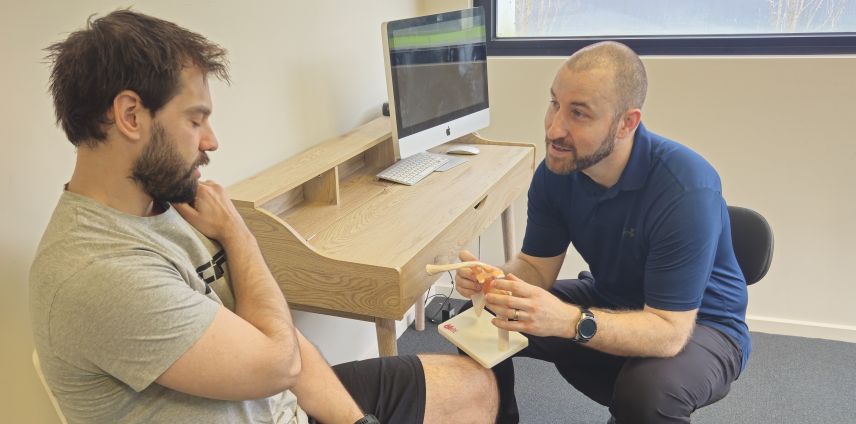
Shoulder impingement is one of the most common causes of shoulder pain we see at Adapt Sports Physiotherapy in Chirnside Park. It affects swimmers, overhead athletes, gym-goers, and people who spend long hours at a desk — and while it can be debilitating, it responds well to physiotherapy when addressed properly.
If you’ve been experiencing pain when lifting your arm, reaching overhead, or lying on your shoulder at night, this guide explains what might be going on and what to do about it.
What Is Shoulder Impingement?
The shoulder contains a narrow space called the subacromial space — the gap between the top of the upper arm bone (humerus) and the bony roof of the shoulder (the acromion). Through this space run the tendons of the rotator cuff and the subacromial bursa (a fluid-filled sac that reduces friction).
Impingement occurs when these structures are compressed or irritated during shoulder movement — typically as the arm is raised. Over time, repetitive compression can lead to inflammation of the tendons (rotator cuff tendinopathy) or the bursa (bursitis), causing pain and limiting movement.
Common Symptoms
- A painful arc of movement when raising the arm — typically between 60 and 120 degrees of elevation
- Pain on the outside or top of the shoulder, sometimes referring to the upper arm
- Difficulty reaching overhead, behind your back, or across your body
- Night pain — particularly when lying on the affected shoulder
- Weakness with overhead activities or lifting
Why Does Shoulder Impingement Develop?
Impingement rarely develops from a single event. It’s typically the result of cumulative factors that alter the way the shoulder moves and loads the subacromial structures. Contributing factors include:
- Rotator cuff weakness: If the small rotator cuff muscles aren’t strong enough to properly centre the humeral head in the socket during movement, the tendons are compressed against the acromion
- Scapular (shoulder blade) instability: Poor scapular control alters the angle of the acromion, reducing subacromial space during arm elevation
- Poor thoracic (mid-back) mobility: Stiffness in the thoracic spine forces the shoulder to compensate, increasing compression
- Postural habits: Sustained forward head and rounded shoulder postures (common with prolonged desk work) tilt the scapula and reduce subacromial space
- Training load errors: Rapid increases in swim training, overhead pressing, or throwing volume
How Is Shoulder Impingement Treated?
Physiotherapy is the first-line treatment for shoulder impingement, and most cases respond well when managed correctly. Treatment at Adapt Sports Physiotherapy typically involves:
Clinical Assessment
A thorough examination identifies not just where you hurt, but why. We assess rotator cuff strength, scapular control, thoracic mobility, and movement patterns to determine the root cause of your impingement — so treatment is targeted at the actual problem.
Manual Therapy
Hands-on treatment to restore joint mobility, reduce pain, and improve thoracic extension and shoulder range of motion.
Exercise Rehabilitation
A progressive exercise program targeting rotator cuff strength, scapular stability, and shoulder control. This is the cornerstone of long-term recovery. Without addressing the muscular contributors, impingement tends to recur.
Postural and Movement Education
Guidance on desk set-up, sleep positions, and technique modification for sport or training to reduce ongoing irritation while the shoulder heals.
Return to Sport Planning
For athletes, we develop a graded return-to-training plan that keeps you active while protecting the shoulder from further irritation. See our shoulder pain physio page for more on what we treat.
How Long Does Recovery Take?
Most cases of shoulder impingement improve significantly within 6–12 weeks of consistent physiotherapy. Athletes with significant rotator cuff involvement may require longer. Early engagement with treatment leads to better outcomes — waiting tends to allow compensatory movement patterns to become ingrained, making recovery more complex.
Frequently Asked Questions
Do I need a scan for shoulder impingement?
In many cases, shoulder impingement can be accurately diagnosed through clinical examination without imaging. Ultrasound or MRI may be recommended if there is suspicion of a significant rotator cuff tear or if symptoms aren’t responding as expected to treatment. Your physiotherapist can advise. (General information only.)
Should I avoid all shoulder exercises with impingement?
Not necessarily. Pain-provoking movements should be modified or avoided in the short term, but maintaining some level of shoulder activity and strength is important for recovery. Your physiotherapist will guide you on what’s appropriate at each stage. (General information only.)
Will shoulder impingement go away on its own?
Some cases do improve with rest alone, but many persist or worsen without addressing the underlying cause. Without targeted rehabilitation of the rotator cuff and scapular muscles, the structural factors that led to impingement remain — and the condition is likely to recur. (General information only.)
Is surgery needed for shoulder impingement?
Surgery for shoulder impingement (subacromial decompression) is generally considered after a thorough course of physiotherapy has not produced adequate improvement. Evidence supports physiotherapy as an effective first-line treatment in the majority of cases. (General information only.)
Can shoulder impingement affect my sleep?
Yes — night pain is a common complaint with shoulder impingement, particularly when lying on the affected side. Positioning advice (such as pillow placement to support the arm) and addressing the underlying inflammation can help improve sleep quality during recovery. (General information only.)