
Patellar Tendinopathy
Patellar tendinopathy is pain at the front of the knee, just below the kneecap, commonly related to jumping, running or gym-based loading. Assessment focuses on how the tendon is currently tolerating load.
30-minute appointments as standard · No referral required
What is Patellar Tendinopathy?
Patellar tendinopathy refers to pain and load intolerance in the patellar tendon, at the front of the knee just below the kneecap. It’s commonly associated with jumping sports and activities involving repeated deceleration or heavy knee loading, such as squats or lunges.
This can include a localised ache directly below the kneecap during or after activity, stiffness after rest, or discomfort that builds with jumping, squatting or running. Symptoms typically relate to a mismatch between tendon capacity and current training demands.
How We Assess Patellar Tendinopathy
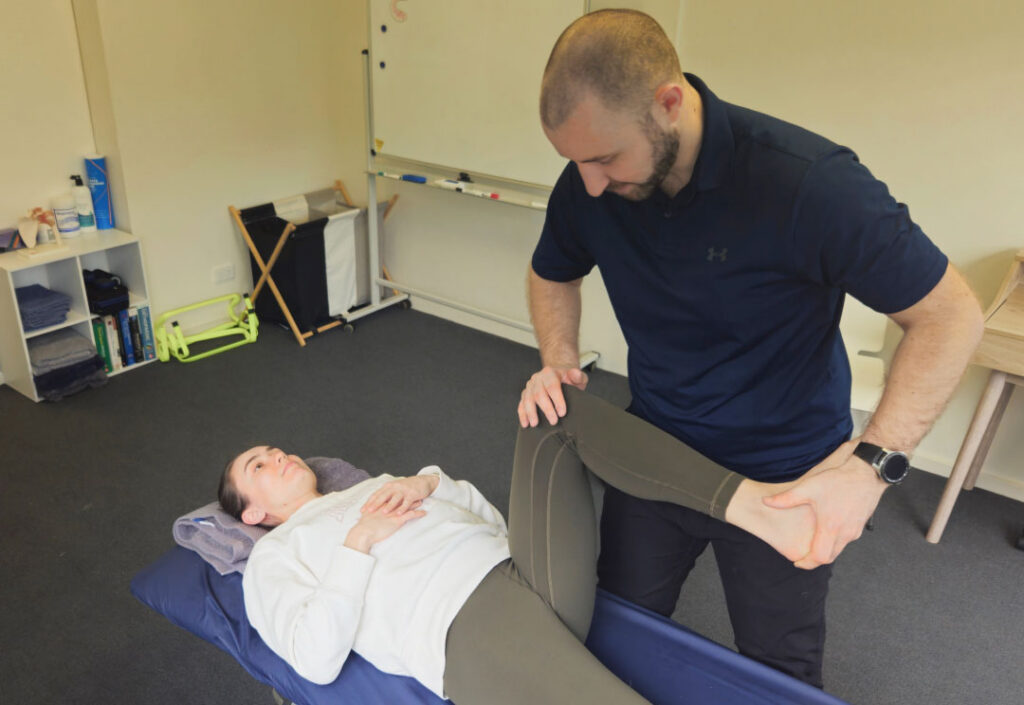
Assessment includes your training and loading history, the specific movements that aggravate your symptoms, and your goals for training or competition.
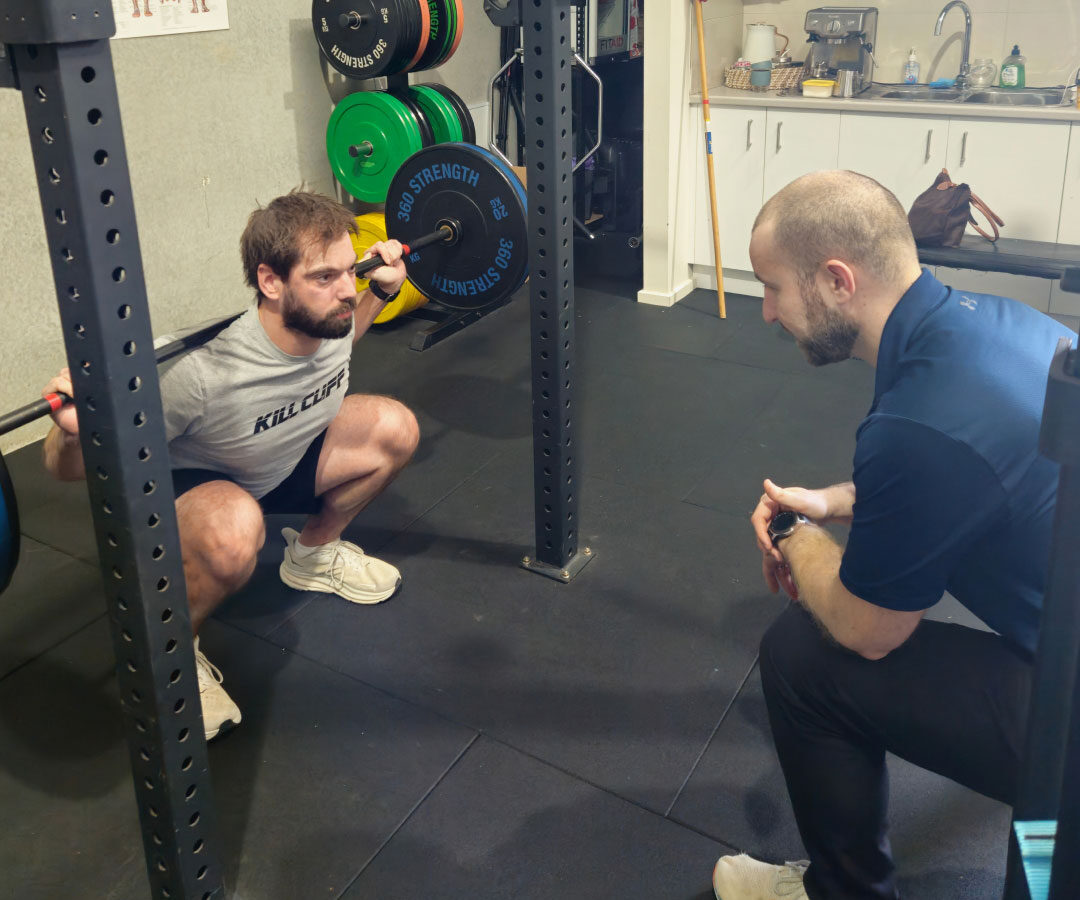
We assess strength and control around the knee, along with how the tendon responds to loaded movements such as squatting, decline squats or jumping, to understand its current capacity.
Treatment and Rehabilitation Approach
Treatment is centred on progressive tendon loading, guided by what the assessment finds, alongside education about managing training demands while the tendon adapts.
For jumping and gym-based athletes, this sits within our wider knee pain and sports physiotherapy approach.
Looking for help with Patellar Tendinopathy?
An assessment can help identify the factors contributing to your symptoms and guide the next steps.
Symptoms
Localised pain below the kneecap
Typically felt directly over the patellar tendon rather than diffusely around the knee.
Pain that follows a loading pattern
Often worse during or after jumping, squatting or running, and eased with rest.
Morning stiffness or start-up pain
Some people notice stiffness after periods of rest that eases with movement.
Causes and Risk Factors
Rapid changes in jump or training load
A sudden increase in jumping, sprinting or heavy knee-loading exercise can outpace tendon capacity.
Strength and landing mechanics
How you absorb load through squatting, landing or decelerating can influence tendon stress.
Insufficient recovery between sessions
Limited recovery time between high-load training sessions can affect how the tendon adapts.
Return-to-Sport Considerations
Progressive tendon loading
Load is increased in structured stages to build tendon capacity without overloading it.
Rebuild jumping and landing capacity
Jump and landing mechanics are reintroduced progressively as tendon tolerance improves.
Return to full training gradually
A staged return to jumping or sport-specific training is planned around how the tendon responds.
Frequently Asked Questions
How long does patellar tendinopathy take to recover?
Tendon recovery varies and can take longer than muscle-related injuries — your physiotherapist can give you a realistic timeframe based on your assessment.
Can I keep training with patellar tendinopathy?
Often yes, with load modified to a level the tendon can tolerate. Complete rest isn’t usually the most helpful approach for tendons.
Do I need a scan for patellar tendinopathy?
Imaging isn’t always required and doesn’t always change management. It’s considered on a case-by-case basis at assessment.
Will patellar tendinopathy come back?
Tendons can be sensitive to sudden load changes in the future, which is why a gradual return to full training is part of the approach.
Clinically reviewed by Ryan Harris on 18/08/2026