
ACL Injury Treatment and Rehab in Chirnside Park
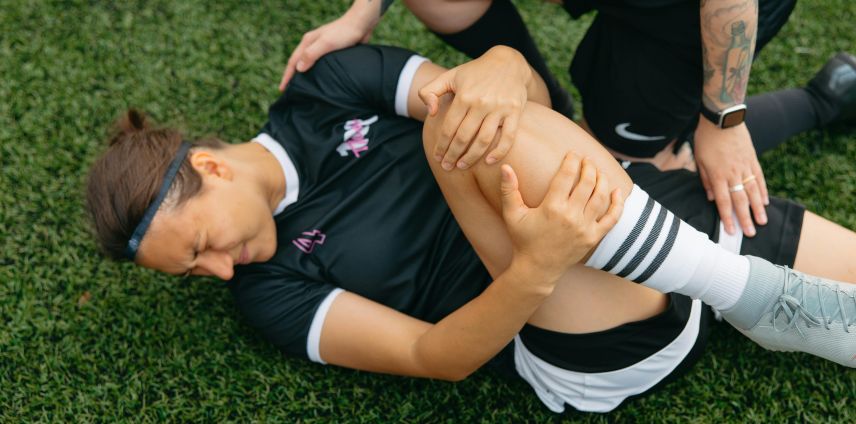
The anterior cruciate ligament (ACL) is one of the key stabilisers of the knee, preventing excessive forward movement of the shin bone and controlling rotational stability. ACL injuries are among the most common and impactful sporting injuries we see — and athletes from Chirnside Park, Croydon and Ringwood present to our clinic regularly after sustaining them during football, basketball, netball, skiing and other sports.
Anatomy of the ACL
The ACL is located in the centre of the knee joint and works alongside the posterior cruciate ligament (PCL) to control rotational stability and forward tibial movement. It plays a critical role during high-demand activities like cutting, pivoting, jumping and sudden deceleration.
Causes of ACL Injury
ACL injuries typically occur in two ways:
- Non-contact injuries — the most common mechanism, often occurring when landing from a jump, suddenly decelerating, or rapidly changing direction. The knee can give way without any external force.
- Contact injuries — from a direct blow to the knee or a collision, as in tackling sports.
Contributing risk factors include poor landing technique, muscle imbalances between the quadriceps and hamstrings, weak hip or core strength, and neuromuscular fatigue during the later stages of a game.
Symptoms of an ACL Tear
- A popping or cracking sound at the time of injury
- Immediate and significant swelling within hours
- Pain and instability — the knee may feel like it “gives way”
- Reduced range of motion and difficulty weight-bearing
Diagnosis
A physiotherapist can assess knee stability using clinical tests including the Lachman test and the pivot shift test. MRI imaging is typically required to confirm the diagnosis and identify any associated damage such as meniscal tears or bone bruising.
Treatment Options
Non-Surgical Management
For partial tears or individuals not returning to high-demand pivoting sport, non-surgical management through a structured physiotherapy program can be highly effective. The focus is on restoring strength, stability and confidence in the knee. Non-surgical pathways have improved significantly with modern rehabilitation approaches — the evidence supports high-quality strength and neuromuscular training as the foundation of conservative ACL management, and many athletes do well without reconstruction, particularly those willing to modify activity demands or whose tear is partial.
Surgical Reconstruction
Complete ruptures in active individuals who want to return to pivoting sport typically require ACL reconstruction. The torn ligament is replaced with a graft (usually from the hamstring or patellar tendon), followed by a comprehensive rehabilitation program. Surgery alone does not determine the outcome — the quality of rehabilitation before and after reconstruction has a major bearing on the result.
Physiotherapy and Rehabilitation
At Adapt Sports Physiotherapy, we create tailored ACL rehabilitation programs for patients from Chirnside Park, Croydon and Ringwood. Our programs are structured in phases:
- Phase 1 — Acute recovery: Reduce swelling, restore range of motion, begin gentle quad activation and weight-bearing
- Phase 2 — Strength and stability: Progressive quad, hamstring and glute strengthening; proprioception and balance training
- Phase 3 — Functional training: Running, agility, change of direction, sport-specific movement patterns
- Phase 4 — Return to sport: Strength benchmarks, hop tests, and functional assessments to confirm readiness
If you’ve just sustained an ACL injury and want a step-by-step breakdown of what to do next, see our ACL injury recovery steps guide. Our minimum timeline for unrestricted return to sport following ACL reconstruction is 9–12 months. This is not an arbitrary number — it reflects the evidence on graft maturation and re-injury rates. Athletes who return earlier, particularly below strength benchmarks, face a significantly elevated risk of re-rupture.
Objective Testing and Return-to-Sport Criteria
Return to sport after ACL injury should be based on criteria, not calendar. At Adapt Sports Physiotherapy, we use VALD ForceDecks force plates and the VALD DynaMo handheld dynamometer to measure limb symmetry objectively at key rehabilitation milestones.
Key benchmarks include limb symmetry index (LSI) for quadriceps and hamstring strength, hop test symmetry, and performance on sport-specific movement tasks. We target a minimum of 90% LSI across strength and functional measures before clearing athletes for full return to sport. These aren’t arbitrary targets — athletes who return below strength benchmarks face a significantly elevated re-injury risk compared to those who meet them.
This objective testing process gives athletes, parents, and coaches clear data on readiness, removing guesswork and providing genuine confidence before the athlete steps back onto the field. For more on our overall approach to sports physiotherapy in Chirnside Park, including how we work across different injury types, see our sports physio overview.
Preventing ACL Injuries
Evidence-based prevention programs including the FIFA 11+ and neuromuscular training protocols have been shown to reduce ACL injury rates significantly when applied consistently. These programs include strength training, plyometrics, balance and agility drills, and proper landing mechanics education — and they work best when embedded into regular training rather than treated as an add-on.
At Adapt Sports Physiotherapy, we work with local football, netball and basketball athletes to implement targeted prevention work. For individuals who have already sustained an ACL injury, prevention of a second ACL injury is a significant focus in later rehabilitation phases. Research shows that re-injury rates remain elevated for several years after returning to sport — another reason criteria-based return-to-sport testing matters as much as it does.
ACL Injuries in Local Sport
We see ACL injuries regularly in athletes from Chirnside Park, Croydon, Lilydale and Ringwood across a wide range of sports. Football and netball account for the majority of presentations, with basketball, skiing and gym-based training also well represented. For footballers specifically, we’ve put together a dedicated guide to ACL injuries in football covering AFL-specific mechanisms, the Footy First prevention program, and return-to-football milestones. Female athletes face a higher statistical risk of ACL injury than male athletes — a difference attributed to a combination of anatomical, hormonal and neuromuscular factors — and we account for this in both rehabilitation and prevention programming.
Whether you’re a junior athlete in your first year of club sport or an adult returning to football in your 30s or 40s, the principles of good ACL rehabilitation are the same: structured, progressive, criteria-based, and built around your goals and your sport. We also have dedicated local guides for patients in Ringwood, Lilydale, and Croydon.
Frequently Asked Questions
Do all ACL tears require surgery?
No. Non-surgical management is appropriate for some patients, particularly those with partial tears or those not returning to high-level pivoting sport. Your physiotherapist can help you assess whether non-surgical or surgical management is more appropriate for your situation. (General information only.)
How long does ACL rehabilitation take?
A full return to high-level sport typically takes 9–12 months, whether managed surgically or non-surgically. Return to lower-demand activities may occur sooner. Timelines vary based on individual progress and rehabilitation consistency. (General information only.)
What is pre-hab for ACL surgery?
Pre-hab refers to completing a structured strengthening and mobility program before surgery. Research consistently shows that patients who complete at least 5 weeks of pre-hab have significantly better outcomes after ACL reconstruction. (General information only.)
Can I return to sport after an ACL injury?
The majority of athletes return to sport following a well-structured ACL rehabilitation program. Return-to-sport decisions are based on passing objective strength and functional criteria, not just time. (General information only.)
What tests do you use before clearing an athlete for return to sport?
We use strength testing with VALD ForceDecks force plates and the VALD DynaMo dynamometer alongside hop tests and sport-specific movement assessments. Key benchmarks include quadriceps and hamstring limb symmetry index (LSI) scores, typically targeting 90% or above. These objective measures are more reliable than time alone as indicators of readiness. (General information only.)