
Rotator Cuff Treatment in Chirnside Park
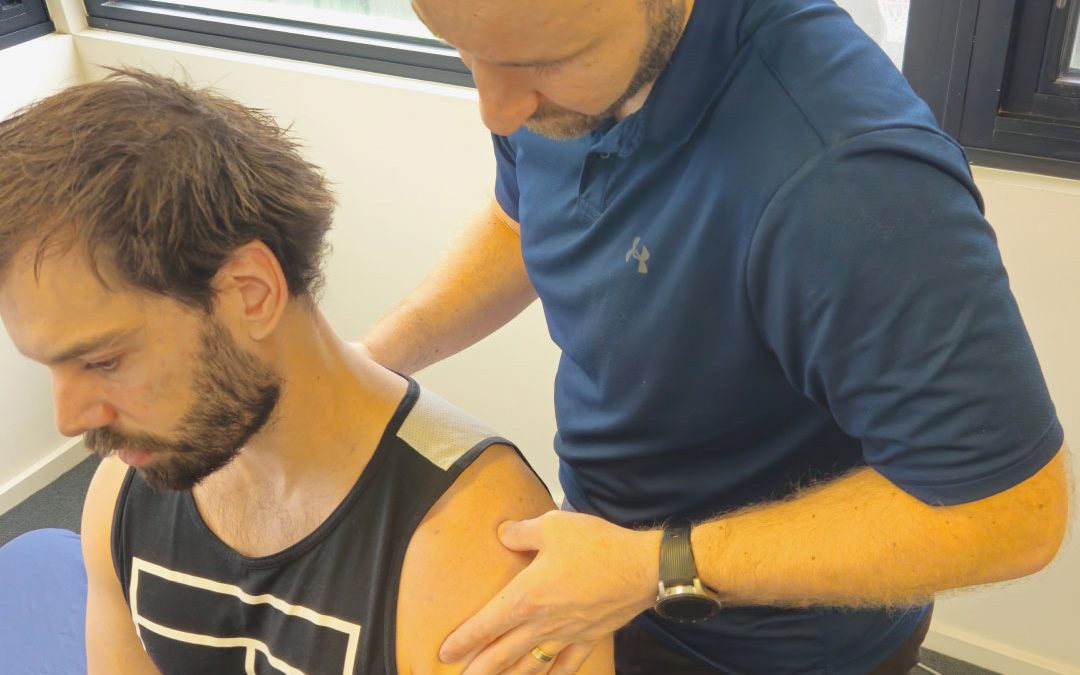
Rotator cuff injuries are a frequent reason patients from Chirnside Park, Croydon and Ringwood come to see us at Adapt Sports Physiotherapy — particularly those involved in overhead sports, manual labour, or repetitive upper limb activities. They’re also common in people who simply do a lot of pressing and pulling in the gym.
The good news is that most rotator cuff injuries respond well to physiotherapy. Understanding what the rotator cuff is, why it gets injured, and what treatment involves helps set realistic expectations for the recovery process.
What Is the Rotator Cuff?
The rotator cuff is a group of four muscles and their tendons that surround the shoulder joint, stabilising the ball (humeral head) within the shallow socket (glenoid) during movement. The four muscles are:
- Supraspinatus — assists in lifting the arm and is the most commonly injured rotator cuff tendon
- Infraspinatus — controls external rotation of the shoulder
- Teres minor — assists with external rotation and adduction
- Subscapularis — controls internal rotation and is important for throwing and pressing movements
These muscles work together constantly during everyday activities and become even more important under load during sport and exercise.
Common Causes of Rotator Cuff Injuries
Rotator cuff injuries can be acute — from a sudden fall, heavy lift, or direct contact — or degenerative, developing gradually from repetitive strain or age-related wear. Contributing factors include:
- Poor shoulder posture sustained over long periods (desk work, driving)
- Weakness or imbalance in the rotator cuff or scapular muscles, reducing dynamic joint control
- Poor lifting technique — particularly during overhead pressing, snatches, or pull-ups
- Overuse from sports like swimming, CrossFit, tennis, or cricket
- Sudden increase in training volume or intensity without adequate preparation
Symptoms of a Rotator Cuff Injury
Common presentations include shoulder pain when lifting the arm overhead or lying on the affected side, weakness with lifting or rotation, clicking or catching sensations during shoulder movement, decreased range of motion, and night pain that disrupts sleep. If pain persists beyond a few days or is significantly limiting your activity, it’s worth consulting a physiotherapist. For more on shoulder pain presentations, see our shoulder pain physio page.
How Is a Rotator Cuff Injury Diagnosed?
Diagnosis is based primarily on clinical assessment — resisted tests, range of motion testing, and specific orthopaedic tests help identify which tendon is affected and the likely severity. Imaging (ultrasound or MRI) can confirm tendon tears or significant inflammation, but is not always required. Your physiotherapist will advise whether imaging is needed based on your presentation. See our posts on shoulder impingement, shoulder pain in Lilydale, and shoulder pain in Croydon for a broader overview of shoulder conditions and when imaging is indicated.
Treatment Options
Conservative Management (Physiotherapy First Line)
Physiotherapy is the first-line treatment for most rotator cuff injuries. A structured program addresses the root cause — not just the pain — through targeted exercise, manual therapy, and education. This is effective for the majority of rotator cuff strains, tendinopathies, and many partial tears.
Corticosteroid Injections
May be used to reduce acute inflammation when pain is limiting engagement with rehabilitation. Typically used alongside physiotherapy rather than as a standalone treatment, and generally not repeated more than 2–3 times.
Surgical Repair
Reserved for large or full-thickness tears, cases that have not responded to a thorough course of conservative management, or where significant functional deficit persists. Post-operative rehabilitation is critical to recovery and typically takes 4–6 months. Our shoulder physiotherapy service includes post-surgical rehab.
Early Stage Rehabilitation Exercises
If pain allows, gentle exercises can begin early in the rehabilitation process. These should be pain-free or produce only very mild discomfort — stop if pain worsens.
- Shoulder blade retractions: Sitting or standing, gently squeeze the shoulder blades together and hold for 5 seconds. Builds scapular stability without loading the injured tendon.
- Isometric external rotation: Stand with elbow bent to 90 degrees and a folded towel between elbow and ribs. Press the back of the hand gently into the wall without moving — hold 5–10 seconds. Activates the rotator cuff with minimal joint movement.
- Wall slides: Stand facing a wall, forearms resting against it. Slowly slide arms overhead and back, maintaining contact. Improves shoulder blade mobility and control.
Avoid exercises that cause sharp pain. A physiotherapy assessment will determine which exercises are appropriate for your specific injury stage and tendon involved. For CrossFit athletes specifically, our post on CrossFit and shoulder injuries covers further early-stage exercise options.
Return to Sport and Work
Return to overhead activities is gradual and guided by strength, control, and symptom response — not just the absence of pain. Our team at Adapt Sports Physiotherapy supports patients with sport-specific and occupation-specific return planning, tailored to the demands of your activity and the stage of your recovery.
Frequently Asked Questions
Will my rotator cuff heal without surgery?
Many rotator cuff injuries — including partial tears — heal well with structured physiotherapy. Full-thickness tears may also respond to conservative management depending on size and the patient’s functional demands. Surgery is not always necessary. Your physiotherapist and surgeon can advise on the best approach for your situation. (General information only.)
How long does rotator cuff rehabilitation take?
Mild to moderate rotator cuff strains or tendinopathies typically show significant improvement within 6–12 weeks. More significant injuries or post-surgical rehabilitation may take 4–6 months. Consistency with the exercise program is one of the most important factors in recovery. (General information only.)
Can I keep training with a rotator cuff injury?
In many cases, yes — with appropriate modifications. Pain-provoking movements should be temporarily modified or avoided, but maintaining some level of upper body activity is generally beneficial. Your physiotherapist can advise on what’s safe at each stage. (General information only.)
Do I need an ultrasound or MRI for my shoulder?
Not necessarily for initial management. Many rotator cuff injuries can be diagnosed and treated based on clinical examination. Imaging is most useful when there is suspicion of a significant tear, when symptoms are not responding as expected, or when surgical assessment is being considered. (General information only.)