
About
Adapt Sports Physiotherapy is built for people who train — genuine athletes, runners, gym-goers, and anyone whose goals involve staying active — and for whom an injury is currently the thing standing in the way. Care here is built around what your sport or training actually demands of you, informed by VALD Dynamo and ForceDecks testing where it’s useful to a decision.
Why Adapt Sports Physiotherapy?
Adapt exists because Ryan Harris wanted to practise differently to how most clinics let him. Follow-up appointments elsewhere are often 20 minutes — not much room for a proper assessment once everything else a session needs to cover is accounted for. Exercise plans were often generic, and sometimes treated as the clinic’s own material rather than something the patient actually got to take away and keep. Clinics rarely had the equipment for the kind of testing that can actually inform a return-to-sport decision. And there was almost never time to talk to a patient’s coach or strength and conditioning staff, even when that conversation would have mattered.
That’s the standard Adapt is built around: 30-minute appointments as standard, real testing equipment, and — with a patient’s consent — direct communication with the people already coaching them. It’s something we aim to keep developing and improving, not a problem we consider solved.
How We Approach Physiotherapy
No two people with the same injury get the same plan. We load strength work differently depending on what testing shows, and build rehab around the specific demands of what you do — someone who needs to sprint is progressed differently to someone who mostly needs acceleration and change of direction. We also consider previous injuries, since an old issue can sometimes be a contributing factor to a new one.
Where it’s useful and a patient consents, we’ll also talk directly to their coach or strength and conditioning staff — by phone or a written report — rather than working in isolation from the training they’re already doing.
The other part of this is simple: the more you understand what’s actually driving your injury, the more likely you are to stick with the plan that addresses it. So explanation isn’t treated as an afterthought — it happens as we go, and again once there’s a full picture to explain.
Assessment & Testing
Testing uses VALD Dynamo and ForceDecks — Dynamo for most patients, ForceDecks specifically where it’s useful, such as for return-to-sport decisions. It adds information to clinical assessment; it doesn’t replace it. Strength is compared side to side, and so is how quickly that strength can be produced, since these can tell different stories. Some patients test as symmetrical on strength alone while still being behind on that second measure — when that’s the case, it’s one part of the picture considered before deciding someone’s ready to return to sport, alongside the clinical assessment.
Who We Treat
Elite-level athletes are less common through the door, but genuine athletes are — alongside a broader mix of active people: runners, gym-goers, weekend sport players, people getting back into training after time off. What they have in common isn’t a level of competition, it’s a goal that an injury is currently getting in the way of.
What to Expect
Appointments are relaxed and conversational. Expect an explanation of what’s going on as we work through it, not just a list of exercises handed over at the end.
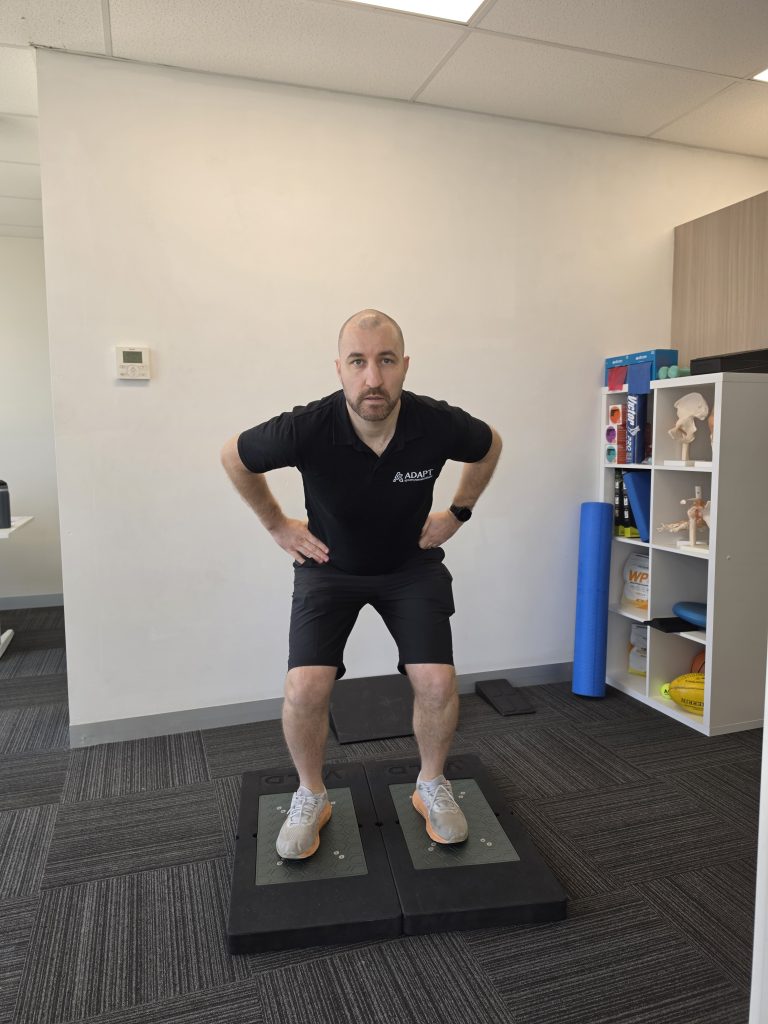
Ryan Harris
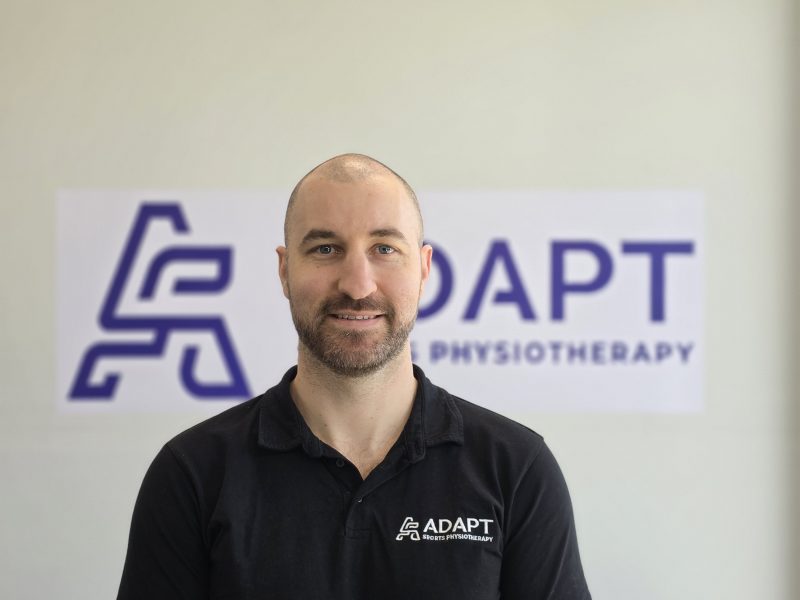
Ryan Harris is a physiotherapist and founder of Adapt Sports Physiotherapy, helping active people overcome injuries, return to sport and continue doing the activities they enjoy.
Since graduating with a Doctor of Physiotherapy from Macquarie University in 2016, Ryan has worked with a wide range of clients, from recreational athletes to elite sporting teams. His experience includes working with the Malaysian Track Cycling Team and supporting athletes at the World Short Course Swimming Championships.
Ryan has a particular interest in sports injuries, running-related injuries and rehabilitation following significant injuries such as ACL tears. His approach combines detailed assessment, evidence-based treatment and progressive exercise rehabilitation to help people build confidence and return to their goals.
Outside of the clinic, Ryan enjoys running, strength training and maintaining an active lifestyle with his family, giving him a personal understanding of the challenges involved in balancing training, work and everyday life.
Qualifications
- Bachelor of Health Science, La Trobe University, 2012
- Doctor of Physiotherapy, Macquarie University, 2016
- APA Sports Physiotherapy Level 1
- APA Dry Needling Course
- Running Repairs Course (Tom Goom)
- Non-surgical Management of ACL Injuries — APA course with Kieren Richardson
- Australian Physiotherapy Association Member
- ASCA Level 1 Strength and Conditioning Coach, 2021