
Basketball Ankle Injuries: A Guide for Croydon Players
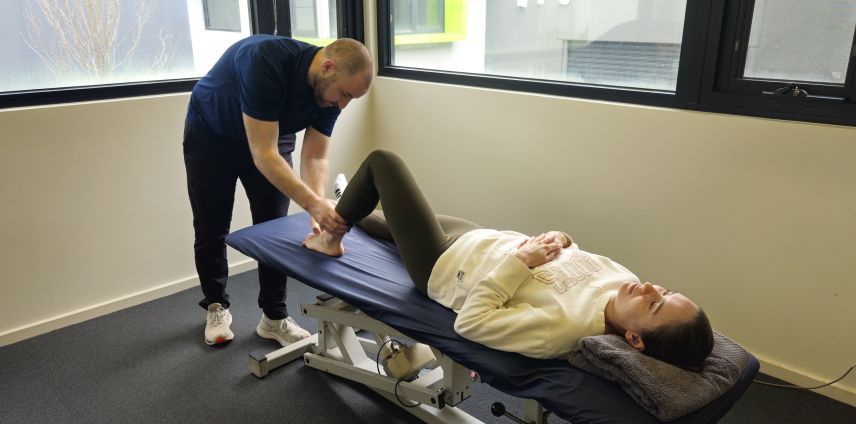
If you play basketball in Croydon — whether that’s at a local rep level, in a social competition, or with your school team — there’s a reasonable chance you’ve rolled an ankle at some point. Ankle sprains are the most common injury in basketball, and they’re responsible for a significant chunk of all time lost to injury in the sport.
The problem is that most basketball ankle injuries are undertreated. Players get strapped up, rest for a week, and get back on the court — without properly rehabilitating the ligament or the proprioceptive deficit that made re-injury almost inevitable. And then they roll the same ankle again. And again.
This guide explains why basketball puts so much stress on the ankle, what proper treatment looks like, and how to significantly reduce your risk of re-injury.
Why Basketball Is High-Risk for Ankle Injuries
Basketball involves a combination of factors that make ankle sprains highly likely without appropriate preparation:
- Jumping and landing: Repeated jump and landing actions — particularly landing on another player’s foot — are the most common mechanism for ankle sprains in basketball
- Rapid change of direction: Cutting, pivoting, and defensive footwork all place high lateral stress through the ankle
- Hard court surfaces: Indoor courts offer minimal shock absorption compared to grass or synthetic outdoor surfaces
- Fatigue: As players tire in the second half or during back-to-back games, neuromuscular control deteriorates — the ankle is less protected by active muscle stabilisation
- History of previous sprain: The single greatest risk factor for ankle sprain is a previous ankle sprain that wasn’t fully rehabilitated
The Most Common Basketball Ankle Injury: Lateral Ankle Sprain
The vast majority of basketball ankle injuries are lateral (outer) ankle sprains — the foot inverts (rolls inward) and the ligaments on the outside of the ankle are stretched or torn. The anterior talofibular ligament (ATFL) is most commonly involved.
Sprains are graded by severity: Grade 1 (mild ligament stretch), Grade 2 (partial tear with significant swelling and pain), and Grade 3 (complete ligament rupture with instability). Higher-grade sprains require more careful rehabilitation and a longer timeline before return to play.
Immediate Management: The PEACE & LOVE Framework
Current best practice for acute ankle sprains follows the PEACE & LOVE framework — replacing the older RICE and POLICE protocols. PEACE covers the immediate phase (Protection, Elevation, Avoid anti-inflammatory modalities, Compression, Education); LOVE covers the days that follow (Load, Optimism, Vascularisation, Exercise).
For a basketball ankle sprain, this means:
- Protect the ankle from further loading immediately after injury — tape, a brace, or crutches if the ankle cannot bear weight comfortably
- Elevate — raise the ankle above heart height when resting to reduce swelling
- Avoid ice and NSAIDs — ice and anti-inflammatory medications are no longer recommended in the acute phase; both can blunt the inflammatory response that is part of the body’s natural repair process
- Compress with a firm bandage or compression sock to manage swelling and provide support
- Educate — understanding your injury, what to expect, and your active role in recovery leads to better outcomes than passive treatment alone
- Load early with pain-guided weight-bearing and gentle movement — don’t stay completely off it
- Vascularise with gentle movement and low-load activity to promote circulation to the healing tissue
- Exercise progressively through rehabilitation — range of motion, strength, balance, then sport-specific drills
Why Proper Rehabilitation Matters More Than Rest
Here is the most important thing to understand about ankle sprains: the ligament pain and swelling resolving is not the same as the ankle being ready to play basketball again.
When you sprain your ankle, you damage the sensory nerve endings inside the ligament — the mechanoreceptors that tell your brain where your ankle is in space. This system, called proprioception, is what allows your ankle to react automatically to uneven surfaces or unexpected contact. Without it, your ankle cannot protect itself fast enough when you land awkwardly in a game situation.
Full proprioceptive rehabilitation is the single most important factor in reducing re-injury risk — and it’s the most commonly skipped stage. It involves progressive balance and neuromuscular training, starting with simple single-leg standing and advancing to sport-specific dynamic balance, agility, and reactive tasks under fatigue. Our ankle sprain guide covers the full rehabilitation pathway in detail.
Return-to-Court Criteria for Basketball Players
Before returning to full basketball training or competition, athletes should be able to:
- Walk and jog without pain or limp
- Perform single-leg calf raises (at least 15–20 reps) without pain
- Balance on the injured leg for 10+ seconds without significant instability
- Complete lateral shuffles and cutting movements without pain or instability
- Jump and land repeatedly on both legs, then on the injured leg alone
- Complete a full basketball training session without pain or compensation
See our foot and ankle physio page for more on how we assess and manage ankle injuries.
Preventing Basketball Ankle Injuries
The evidence for ankle injury prevention in basketball is strong — the following strategies consistently reduce injury rates:
- Ankle strengthening program: Calf raises (straight and bent knee), single-leg balance training, resistance band ankle exercises, and hip abductor strengthening all contribute to ankle stability
- Proprioception training: Regular balance board, wobble board, or unstable surface training builds the neuromuscular responses that protect the ankle during sport
- Appropriate footwear: Basketball shoes with adequate ankle support and non-worn soles significantly reduce sprain risk compared to running shoes or worn-out court shoes
- Ankle bracing or taping: External support during play is particularly beneficial for players with a history of previous sprains — evidence consistently shows it reduces re-injury rates
- Dynamic warm-up: Including ankle-specific warm-up movements (heel-toe walks, lateral hops, calf activation) before every training session and game
- Fully rehabilitate previous injuries: The most powerful prevention strategy is not returning to play before the ankle has been properly rehabilitated
Frequently Asked Questions
Should I use an ankle brace for basketball after a sprain?
Evidence supports the use of ankle bracing or taping during return to sport for athletes who have previously sprained their ankle. It reduces re-injury risk without significantly affecting performance. Your physiotherapist can advise on the appropriate type of support for your situation. (General information only.)
How long before I can play basketball after an ankle sprain?
Return to play timelines depend on the grade of sprain and the quality of rehabilitation. Grade 1 sprains may allow return in 1–2 weeks. Grade 2 typically requires 3–6 weeks. Grade 3 sprains can take 2–3 months before unrestricted competition is appropriate. These timelines assume active rehabilitation throughout. (General information only.)
I’ve had multiple ankle sprains — will I always be vulnerable?
Chronic ankle instability from repeated sprains is common but not inevitable. A thorough rehabilitation program addressing proprioception, strength, and neuromuscular control — even after multiple injuries — can significantly improve ankle stability and reduce ongoing re-injury risk. (General information only.)
Do I need to see a physio for a minor ankle sprain?
Even minor ankle sprains benefit from physiotherapy assessment to ensure the injury is accurately graded, that a fracture is excluded where appropriate, and that a structured rehabilitation plan is in place. This is how minor sprains stay minor rather than becoming a chronic problem. (General information only.)
What exercises can I do while my ankle is healing?
Upper body conditioning, cycling (once pain allows), and pool-based activity are all useful for maintaining fitness during ankle rehabilitation. Your physiotherapist will guide which lower-body exercises are appropriate at each stage of your recovery. (General information only.)