
CrossFit Lower Back Pain: Causes and Physio Tips
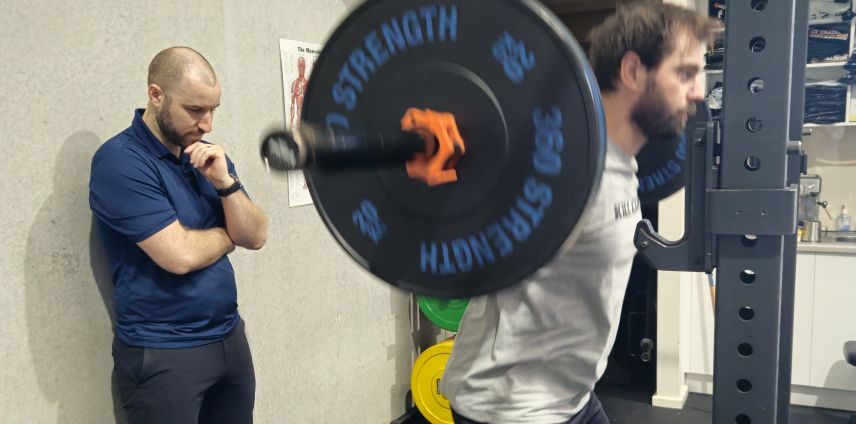
Lower back pain is one of the most common complaints among CrossFit athletes. The combination of high loads, explosive movements, and repetitive stress creates real demand on the lumbar spine — and when technique, mobility, or load management breaks down, the lower back is often the first place that signals a problem.
While CrossFit itself is not inherently bad for the lower back, poor mechanics, insufficient mobility, and inadequate core engagement can lead to pain and injury. The good news is that most CrossFit-related lower back pain can be managed without stopping training entirely. For a broader overview of lower back pain in CrossFit, see our post on lower back pain after deadlifts.
Common Causes of Lower Back Pain in CrossFit
1. Poor Lumbo-Pelvic Control Under Load
Movements like deadlifts, squats, and Olympic lifts require optimal spinal positioning and consistent core engagement throughout. When the lower back rounds under load or extends excessively (butt wink, hyperextension at lockout), it places additional stress on the lumbar discs and posterior structures. This is particularly evident during high-rep WODs when fatigue accumulates.
2. Insufficient Core Bracing
A strong, well-coordinated core stabilises the spine during heavy lifts and dynamic movements. When the deep core (transversus abdominis, multifidus, diaphragm) does not engage effectively, the lower back absorbs a disproportionate amount of load. Diaphragmatic bracing — learning to create intra-abdominal pressure before and during lifts — is one of the most important technical corrections for reducing lower back stress. See our back pain physio page for more on how we assess and address this.
3. Overuse and Fatigue-Driven Technique Breakdown
High-rep workouts and training at high intensity without adequate recovery cause muscular fatigue. As technique breaks down under fatigue, compensatory patterns emerge — often increasing lower back stress. This is one of the reasons lower back pain frequently occurs in the later rounds of a WOD rather than the first.
4. Mobility Restrictions
Limited hip mobility or restricted thoracic extension forces the lumbar spine to compensate. This is particularly evident in overhead lifts — where restricted thoracic mobility causes the lower back to extend excessively to achieve the overhead position — and in squats, where poor ankle and hip mobility leads to forward lean and lumbar flexion under load.
How Key CrossFit Movements Load the Lower Back
Deadlifts
The deadlift requires a neutral spine with proper hip hinging throughout the movement. Engaging the lats and bracing through the core prior to initiating the pull helps maintain spinal stability. Keeping mid-foot pressure distributes force effectively and reduces lumbar compensation. The lower back should feel like it’s working isometrically — not like it’s the primary mover.
Squats
Good squat mechanics rely on balanced hip and knee movement with adequate ankle dorsiflexion. A strong brace prevents excessive forward lean and rounds the responsibility of the movement through the hips and legs rather than the lower back. Heel elevation can be a short-term tool to manage ankle restriction while mobility is being addressed.
Olympic Lifts (Clean and Jerk, Snatch)
These lifts demand strength, power, and significant mobility. Poor technique — especially during the catch phase — can overload the lower back. Adequate hip and thoracic mobility are prerequisites for efficient bar path and safe spinal alignment under load.
Exercises to Reduce Lower Back Pain Risk
These exercises address the most common contributors to CrossFit lower back pain. They can be used as warm-up activation or as rehabilitation exercises — stop any that significantly increase pain.
Hip Flexor Stretch
- Kneel on one knee with the opposite foot forward
- Maintain an upright torso and gently shift forward until a stretch is felt in the front of the hip
- Hold for 30 seconds each side — repeat 2–3 times
Glute Bridge
- Lie on your back with knees bent and feet flat on the floor
- Brace your core, then lift your hips by driving through the heels and squeezing the glutes
- Lower slowly and repeat for 12–15 reps, 3 sets
Single-Leg Romanian Deadlift
- Stand on one leg with a slight knee bend
- Hinge at the hips while extending the other leg behind — maintain a straight back and neutral spine
- Return to start with control — 8–12 reps per side, 3 sets
Dead Bug
- Lie on your back with arms extended toward the ceiling and knees bent to 90 degrees
- Slowly lower the opposite arm and leg toward the floor while maintaining lower back contact with the ground
- Return and repeat on the other side — 8–10 reps each side, 3 sets
Managing Lower Back Pain Without Stopping Training
The instinct when the lower back flares is to rest completely — but in most cases, that’s not the most effective approach. Active management with appropriate load modifications tends to produce better outcomes than complete rest — and staying active within comfortable limits often speeds recovery. Here’s how to approach it practically.
Modify, don’t stop: Reducing intensity and volume while maintaining movement quality is the preferred approach over complete rest. Substituting conventional deadlifts for Romanian deadlifts or trap bar deadlifts, or reducing loads temporarily, allows continued training while the back settles.
Address mobility restrictions: Improving hip and thoracic mobility reduces compensatory lumbar movement. Targeted mobility drills performed regularly — not just occasionally — make a real difference over time.
Strengthen the posterior chain: Glutes, hamstrings, and deep core muscles provide the foundation for safe loading. Progressive strengthening through our sports physiotherapy program builds the capacity to train hard without overloading the lower back.
When to seek a physiotherapy assessment: If pain persists beyond 1–2 weeks, worsens with training modifications, or radiates into the buttock or down the leg, seek assessment. Our back pain physiotherapy service includes movement screening, manual therapy, and a tailored exercise program.
Frequently Asked Questions
Is it normal for my lower back to be sore after CrossFit?
Some muscle soreness in the lower back after heavy deadlifts or squats is common. What’s not normal is sharp pain during lifting, pain that persists for days, or pain that radiates into the leg. If it goes beyond mild muscular soreness, it warrants assessment. (General information only.)
Should I stop deadlifting if my back hurts?
Not necessarily. Modifying the movement — reducing load, switching variation, or addressing technique — is often more appropriate than stopping entirely. A physiotherapy assessment can identify what’s contributing to your pain and guide safe modifications. (General information only.)
How do I know if my lower back pain is a disc issue?
Disc-related lower back pain often presents with pain radiating into the buttock or down the leg (sciatica), with symptoms that worsen with sustained flexion positions (sitting, bending forward). A physiotherapy assessment can help identify the likely source of pain and determine whether further investigation is needed. (General information only.)
Can physiotherapy improve my CrossFit performance as well as treat pain?
Yes. Identifying and correcting movement deficits, improving mobility, and building strength in the right areas addresses pain and frequently improves performance. Many athletes find their lifts improve once the underlying contributors to their back pain are addressed. (General information only.)