
Preseason Injuries in Football: How to Prepare and Stay on the Field
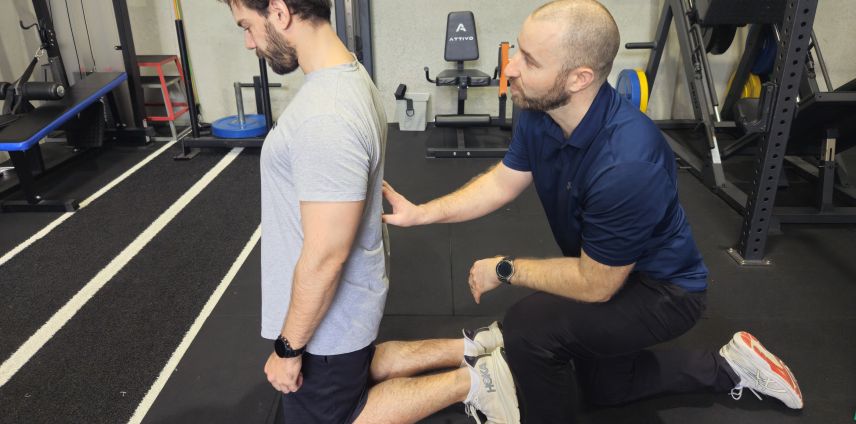
At Adapt Sports Physiotherapy in Chirnside Park, we see a predictable surge in injury presentations at the same time every year: preseason. Whether it’s local football clubs kicking off training in November, or recreational players pushing hard to be ready for round one, preseason is consistently the period of highest injury risk — and most of those injuries are preventable.
Understanding why preseason carries such a high risk, and what to do about it, is the first step to arriving at round one in one piece — and staying there across a full season.
Why Preseason Is the Highest-Risk Period
The physiology is straightforward. Over the off-season, most athletes have reduced their training significantly. Their muscles, tendons, and connective tissues have adapted to lower loads. Then preseason arrives and they’re suddenly asked to run, sprint, jump, and compete at close to full intensity — sometimes from the very first session.
The body simply isn’t ready. Tendons in particular adapt much more slowly than cardiovascular fitness does. An athlete might feel fit enough to train hard after two weeks back, but their tendons and muscles may need 8–12 weeks to adapt to that level of load. That gap between perceived readiness and actual tissue capacity is where most preseason injuries occur.
Football compounds this with its specific physical demands — high-impact collisions, explosive sprints, sudden changes of direction, and repetitive jumping and landing. Without proper physical preparation, the body isn’t ready to absorb these forces across a full preseason block.
The Most Common Preseason Football Injuries We See
Hamstring Strains
The most common preseason football injury, particularly in athletes who go from minimal off-season activity to sprint sessions. Hamstrings are most vulnerable when fatigued or when sprint load increases rapidly. A structured preseason strength program — particularly Nordic hamstring curls — significantly reduces risk. For more detail on managing hamstring injuries, see our early-stage hamstring recovery guide. ACL injuries are also disproportionately common in preseason — our ACL injuries in footballers guide covers prevention strategies specific to football.
Patellar Tendinopathy (Jumper’s Knee)
The patellar tendon connects the kneecap to the shin and is put under load during running, jumping and landing. When volume increases suddenly, the tendon can become painful and reactive. Early load management and specific tendon loading exercises are the key to managing this before it becomes chronic.
Achilles Tendinopathy
Like the patellar tendon, the Achilles reacts poorly to sudden load spikes. Morning stiffness and pain at the start of a run that eases with warm-up are early warning signs. Catching this early in preseason allows management without missing significant training time.
Ankle Sprains
Change-of-direction movements, uneven surfaces, and fatigue-related coordination errors make ankle sprains common in the early preseason — particularly in athletes who haven’t done balance and agility work during the off-season. Athletes with a history of previous ankle sprains are at significantly elevated re-injury risk if they haven’t addressed ankle strength and proprioception. A targeted preseason ankle stability program is one of the more effective injury prevention investments a footballer can make.
Calf and Groin Strains
Both are common when explosive movements are reintroduced before adequate preparation. Graded sprint exposure and targeted strength work in the weeks before preseason reduce the likelihood of both.
Building Physical Readiness Before Round One
Strength and Stability
Strong muscles protect joints and reduce injury risk. For football, the key areas are lower body strength through squats, lunges, deadlifts and single-leg exercises; hamstring-specific work through Nordic curls and Romanian deadlifts; glute activation for hip and knee control during explosive movements; and core stability to protect the lower back and support efficient running mechanics. Ideally, this strength work begins 8–10 weeks before your first preseason session, not alongside it.
Flexibility and Mobility
Restricted mobility forces compensatory movement patterns that load structures unevenly. For footballers, hip flexor, hamstring and calf flexibility directly affect lower limb injury risk, while thoracic mobility supports efficient running mechanics and shoulder function. Ankle mobility is critical for landing mechanics and change of direction — and is frequently overlooked.
Sport-Specific Movement
Football requires the ability to accelerate, decelerate, cut, pivot and jump — often under fatigue. Preseason training should progressively introduce agility and change-of-direction drills, plyometric work for explosive power, and landing mechanics practice. Evidence-based warm-up programs such as the Footy First protocol have been shown to reduce injury rates significantly when used consistently.
Load Management: The Most Underrated Injury Prevention Tool
The single most preventable cause of preseason injury is doing too much too soon. Most coaches and players understand this in theory but underestimate how much the body deconditions over a 10–16 week off-season. An athlete who was training at high intensity in July may be starting virtually from scratch by October in terms of tissue capacity.
Key principles: increase training volume by no more than 10% per week, build in at least one full rest day, prioritise sleep — this is when soft tissue adapts and repairs — and address niggles early rather than training through them. A small niggle in week one of preseason, managed appropriately, stays small. Ignored and trained through, it often becomes a significant injury by week three.
How Physiotherapy Supports Your Preseason
A preseason physiotherapy assessment at Adapt Sports Physiotherapy identifies movement deficits, strength imbalances, and injury history factors that put you at greater risk — before those issues become injuries. We review your injury history, screen your movement, assess key strength benchmarks, and build a targeted plan around your sport and your individual risk profile.
For athletes returning from a significant injury — an ACL reconstruction, a grade 2 hamstring tear, or a long-standing tendinopathy — we can also help structure a return-to-football program that builds load safely across preseason. Our sports physiotherapy service supports footballers from Chirnside Park, Croydon, Ringwood, Mooroolbark and Lilydale.
Frequently Asked Questions
When should I book a preseason physiotherapy assessment?
Ideally 6–8 weeks before your first game. This gives enough time to address identified issues through a structured program before the season begins. (General information only.)
I feel fine — do I still need a preseason assessment?
Many preseason injuries occur in athletes who felt completely fine at the start of preseason. Feeling fit doesn’t mean your tendons and muscles are ready for high loads. An assessment identifies subclinical risk factors that often aren’t felt until they become an injury. (General information only.)
When should I start preseason training?
Ideally 10–12 weeks before your first game. This allows time to build a proper strength base, address mobility restrictions, and progressively increase football-specific conditioning without rushing. If you can’t start that early, even 6 weeks of targeted preparation makes a meaningful difference to injury risk. (General information only.)
Can I do preseason training while recovering from an injury?
In many cases, yes — a modified training program can be developed that allows you to maintain fitness and football-specific conditioning while protecting the injured area. Your physiotherapist can guide this. (General information only.)
What happens in a preseason physiotherapy assessment?
A preseason assessment typically involves a review of your injury history, movement screening, strength testing, and a discussion of your training plan and goals. The outcome is a targeted plan for your preseason — not just a list of what hurts. (General information only.)