
Early Hamstring Injury Recovery: What to Do First
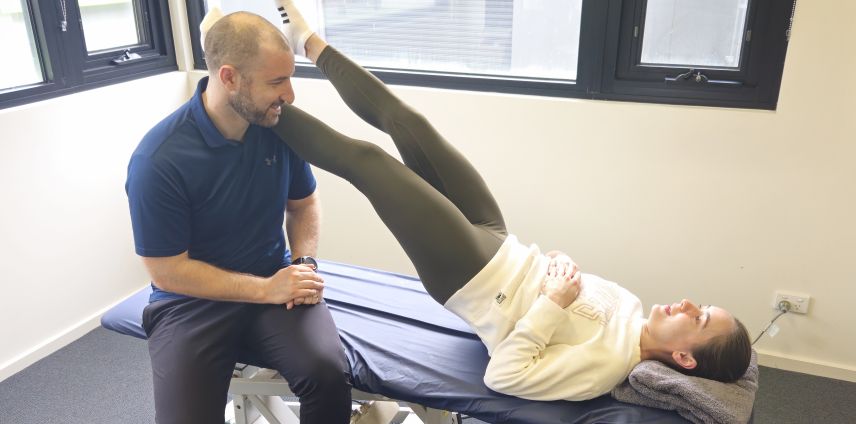
Hamstring injuries are one of the most common muscle strains in sport — particularly in athletes involved in sprinting, football and other high-intensity activities. Whether you’ve strained your hamstring at a local club in Chirnside Park, on a Croydon athletics track, or during a Ringwood football game, managing the early stages correctly is critical.
Get it right and you’re back to sport with a strong, resilient hamstring. Get it wrong — by returning too soon or not rehabilitating properly — and re-injury rates are high.
Grading a Hamstring Strain: Why It Matters
Hamstring strains are classified into three grades based on the extent of muscle fibre damage. Knowing the grade of your strain shapes every aspect of your rehabilitation — how long you need to modify activity, what exercises are appropriate, and when it’s safe to return to high-speed running and sport.
Grade 1 — mild strain: A small number of muscle fibres are disrupted. You may feel a twinge or sudden tightness during activity, but can often continue walking with minimal pain. Full recovery typically takes 1–3 weeks with appropriate management.
Grade 2 — moderate strain: A more significant but incomplete tear. There is usually notable pain at the time of injury, immediate difficulty running, and tenderness when palpating the muscle. Swelling and bruising may develop over 24–48 hours. Recovery typically takes 4–8 weeks and requires a structured rehabilitation program to prevent re-injury.
Grade 3 — severe strain or complete tear: A complete or near-complete rupture of the muscle fibres. This is painful, often associated with a noticeable defect in the muscle, and produces significant functional limitation. Recovery takes 3–6 months or more, and in some cases surgical consultation may be recommended.
A physiotherapy assessment at Adapt Sports Physiotherapy can help grade the strain and give you a realistic picture of your recovery timeline. Our sports physiotherapy service covers hamstring injuries for athletes from Chirnside Park, Croydon, Ringwood and Lilydale.
Pain vs No Pain: Understanding Your Limits
In the early stages of hamstring rehabilitation, pain is your guide to what’s safe and what isn’t:
- Pain-free movements: These can be performed without worsening the injury and help maintain mobility and early strength
- Mild discomfort (2–3/10 on a pain scale): Some controlled strengthening exercises may be tolerated at this level, but should not cause sharp or increasing pain
- Sharp pain or increased soreness: If an exercise or movement significantly increases pain, it is too advanced for the current stage of healing — back off
When Can You Return to Running?
Returning to running too soon is the most common cause of hamstring re-injury. Before progressing to light jogging, athletes should be able to:
- Walk completely pain-free at normal pace
- Perform bodyweight hamstring exercises without discomfort
- Complete gentle hip extension movements without sharp pain
When these criteria are met, begin with low-intensity straight-line jogging only. There should be no sharp pain during or after the session. Sprinting and high-speed directional changes should be avoided until later rehabilitation stages.
Active Exercises for Early Hamstring Rehabilitation
These controlled, low-load exercises help maintain strength and flexibility without aggravating the injury:
1. Isometric Hamstring Bridge Hold
- Lie on your back with knees bent and feet flat on the floor
- Lift your hips, engaging the hamstrings, and hold for 10–20 seconds
- Lower slowly and repeat for 3–4 sets
This activates the hamstrings with minimal muscle lengthening — ideal in the early stages.
2. Seated Hamstring Curl with Resistance Band
- Sit with a resistance band around your heels, anchored to a sturdy object in front
- Slowly curl your heels toward you, engaging the hamstrings
- Return to start and repeat for 10–12 reps, 3 sets
3. Standing Hamstring Controlled Extensions
- Stand on one leg with a slight bend in the knee
- Slowly extend the opposite leg backward in a controlled movement
- Return to start and repeat for 10 reps each leg, 3 sets
All exercises should be pain-free or produce only very mild discomfort (2/10 or less). Stop if pain increases or sharpens.
Acute Management: What to Do in the First 48–72 Hours
In the immediate period after a hamstring strain, current best practice follows the PEACE & LOVE framework — replacing the older RICE and POLICE protocols. PEACE stands for Protection, Elevation, Avoid anti-inflammatory modalities, Compression, Education; LOVE stands for Load, Optimism, Vascularisation, Exercise.
In practice, this means: protect the injured area from further harm, elevate the leg when resting, use light compression if helpful, and avoid ice and anti-inflammatory medications (NSAIDs) in the acute phase — both can interfere with the inflammatory response that drives tissue repair. Early, gentle movement within pain-free limits is encouraged rather than complete rest. For more on managing running-related soft tissue injuries, see our running injuries page.
When to See a Physiotherapist
Early assessment is valuable for all but the mildest Grade 1 strains. Specifically, seek physiotherapy assessment if:
- You heard a pop or felt a sudden sharp pain at the time of injury
- Pain is persisting or worsening beyond 2–3 days with basic movement
- You have significant bruising or swelling in the thigh
- You are uncertain about the grade of the injury or when it’s safe to return to training
- You’ve had a previous hamstring strain (re-injury risk is significantly higher without proper rehabilitation)
At Adapt Sports Physiotherapy in Chirnside Park, we assess and treat hamstring injuries for athletes from Croydon, Ringwood, Lilydale and surrounding areas. Our tailored rehabilitation programs are structured around your sport, your training timeline, and objective return-to-running criteria — ensuring a safe return to sport with minimised re-injury risk.
Frequently Asked Questions
How long does a hamstring strain take to heal?
This depends heavily on the grade of the strain. Grade 1 (mild) strains may resolve in 1–3 weeks. Grade 2 (moderate) strains typically take 4–8 weeks. Grade 3 (severe) tears can take 3–6 months or longer. Individual factors and rehabilitation consistency also influence timelines. (General information only.)
Should I stretch my hamstring after a strain?
Aggressive stretching in the early stages of a hamstring strain is generally not recommended as it can aggravate the injury. Gentle, pain-free range of motion can be appropriate, but this should be guided by your physiotherapist based on the stage of healing. (General information only.)
Can I keep playing sport with a hamstring strain?
Playing through a hamstring strain significantly increases re-injury risk and can turn a minor strain into a more serious one. It’s generally advisable to rest from sport until you can sprint at full pace without pain or inhibition. (General information only.)
What is the Nordic curl and why is it recommended for hamstring injuries?
The Nordic hamstring curl is an eccentric strengthening exercise shown in research to reduce hamstring injury rates in athletes. It’s typically introduced in the later stages of rehabilitation once basic strength is established — not in the acute early phase. (General information only.)
How do I prevent hamstring injuries from recurring?
Key strategies include: not returning to high-speed running before strength criteria are met, maintaining a year-round strength program including Nordic curls and hip-dominant exercises, and managing training load carefully when returning from a break. For footballers, our guide to preseason injury prevention covers hamstring-specific preparation. (General information only.)
When should I see a physiotherapist for a hamstring injury?
Seek assessment if pain persists beyond a few days, worsens with basic movement or walking, if you heard or felt a pop at the time of injury, or if you are uncertain about the severity of the strain. Early physiotherapy assessment helps confirm the diagnosis and reduces re-injury risk. (General information only.)