
How Physiotherapy Can Help Athletes Perform at Their Best
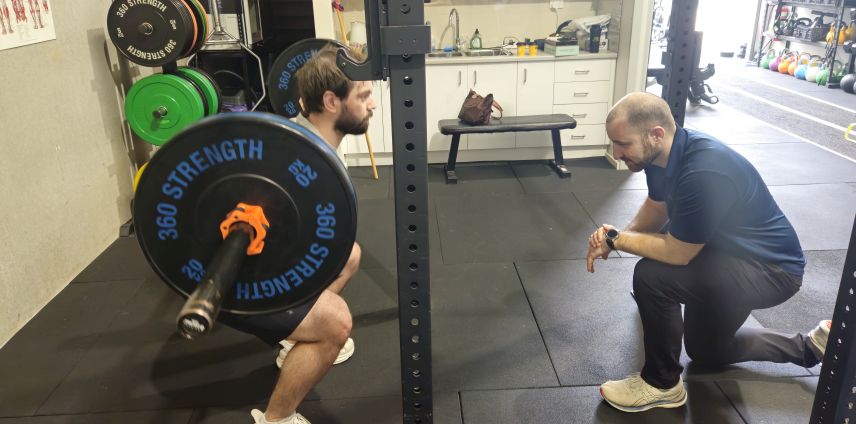
Most people associate physiotherapy with injury treatment — and that’s certainly a core part of what we do. But for serious athletes, physiotherapy plays a much broader role. It’s a tool for improving the way your body moves, identifying weaknesses before they become injuries, and building the physical resilience to train and compete consistently over time.
At Adapt Sports Physiotherapy in Chirnside Park, we work with athletes at every level — from local club players in Croydon and Ringwood to competitive athletes with higher performance goals. Here’s how physiotherapy can help you perform at your best.
1. Identifying and Addressing Movement Deficits
Many athletes train hard without ever knowing that their body has compensations, asymmetries, or movement deficits that are limiting their performance and increasing their injury risk. A physiotherapy movement assessment identifies these issues before they become problems.
Common findings include: hip mobility restrictions that alter running mechanics, scapular stability deficits that reduce overhead power, ankle stiffness that compromises landing mechanics, and strength imbalances between limbs. Addressing these doesn’t just reduce injury risk — it often improves performance directly.
2. Managing Load and Recovery
Training load management is one of the most important determinants of both performance and injury risk. Push too hard, too fast, and injury follows. Under-train, and adaptation stalls. The balance is highly individual — and it shifts throughout a season.
Physiotherapists work with athletes to monitor training volume and intensity, adjust loads when niggles appear, and plan appropriate recovery windows. This is particularly important during preseason (when load increases rapidly), after injury, and during high-competition periods.
3. Treating Injuries Early — Before They Become Season-Enders
Elite athletes treat their body like a high-performance machine — small problems get addressed before they become big ones. The same approach is available to every athlete. A hamstring tightness that gets assessed and managed in week two of preseason is very different to a grade 2 hamstring strain in round four because it was ignored.
Early physiotherapy assessment of developing symptoms consistently leads to better outcomes — shorter recovery time, less impact on training, and lower re-injury risk. Our sports physiotherapy service is designed for exactly this kind of proactive management.
4. Structured Injury Rehabilitation
When injuries do occur, the quality of rehabilitation directly affects the outcome. A physiotherapy-guided rehabilitation program provides:
- An accurate diagnosis and understanding of the injury grade and timeline
- A progressive exercise program that rebuilds strength, mobility, and sport-specific function
- Objective return-to-sport criteria — so the decision to return is based on what your body can do, not just how it feels
- Education on load management to reduce the risk of recurrence
Skipping stages of rehabilitation or returning to sport based on pain alone (rather than functional capacity) is the most common reason injuries recur. Good rehabilitation doesn’t cut corners — it builds a foundation.
5. Sport-Specific Strength and Conditioning
Not all strength programs are created equal for every sport. The demands of a footballer are different to those of a runner, a swimmer, or a CrossFit athlete. A physiotherapy-informed strength program accounts for the specific movement demands, injury history, and physical profile of the individual athlete.
At Adapt Sports Physiotherapy, strength and conditioning is integrated into everything we do — from the early stages of injury rehabilitation through to performance-focused programs for athletes who want to train smarter and stay healthier across a full season.
6. ACL and Complex Injury Rehabilitation
For athletes who have sustained significant injuries — ACL reconstruction, shoulder surgery, complex ankle injuries — the rehabilitation process is long, demanding, and requires expert guidance. A thorough ACL rehabilitation program, for example, typically takes 9–12 months and involves progressive milestones that must be met before return to sport is considered safe.
We are passionate about ACL rehabilitation at Adapt Sports Physiotherapy. See our dedicated ACL rehabilitation page for more on how we approach this process.
Why Athletes in Chirnside Park Choose Adapt Sports Physiotherapy
Athletes choose us because we understand what it means to compete and to train — and we don’t treat every athlete as though their only goal is to be pain-free. We know that performance matters, that timelines matter, and that a plan which ignores those realities isn’t actually helpful.
Our approach combines clinical excellence with a genuine understanding of the athlete’s world. We assess thoroughly, treat specifically, and build programs that address the cause — not just the symptom. We work with athletes from Chirnside Park, Croydon, Ringwood, Lilydale and Mooroolbark across a wide range of sports and levels.
Frequently Asked Questions
Do I need to be injured to see a sports physiotherapist?
No. Preseason assessments, movement screens, and performance-focused programs are all appropriate for healthy athletes who want to perform better and reduce injury risk. Many athletes benefit from physiotherapy as a regular part of their training support — not just when something goes wrong. (General information only.)
How is sports physiotherapy different from regular physiotherapy?
Sports physiotherapy applies the same foundational skills with a specific focus on athletic populations — accounting for sport-specific demands, performance goals, competitive timelines, and higher levels of physical activity. Return-to-sport criteria and sport-specific rehabilitation are central to sports physiotherapy. (General information only.)
How often should an athlete see a physiotherapist?
This varies considerably depending on the athlete’s goals, injury status, and training demands. During injury rehabilitation, frequent appointments are typically needed. For prevention or performance, periodic assessments throughout the season may be appropriate. Your physiotherapist can recommend a schedule based on your situation. (General information only.)
Can physiotherapy improve my running speed or strength?
Physiotherapy can identify and address physical limitations — restricted mobility, strength imbalances, movement inefficiencies — that may be holding back performance. Addressing these factors often contributes to improvements in speed, power, and endurance. (General information only.)
For more on how we support athletes across a range of sports, visit our sports physiotherapy service page, or see our overview of sports physio in Chirnside Park and preseason injury prevention.