
CrossFit Shoulder Injuries: Prevention, Treatment and Exercises
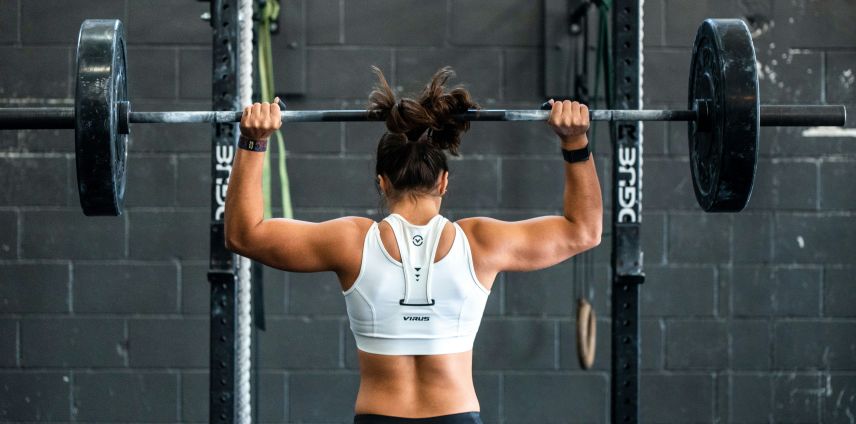
If you train CrossFit regularly, there’s a reasonable chance your shoulder has given you trouble at some point — or will. Shoulder injuries are among the most common presentations we see from CrossFit athletes at Adapt Sports Physiotherapy, and for good reason: the sport demands extraordinary volume and load through the shoulder joint, from snatches and overhead squats to kipping pull-ups, handstand push-ups, and muscle-ups.
The good news is that most CrossFit shoulder injuries don’t require you to stop training altogether — they need to be managed correctly.
Why CrossFit Places High Demand on the Shoulder
The CrossFit shoulder works in ways that few other sports demand. It’s asked to stabilise overhead at maximum load (snatch, overhead squat), generate force through a kipping motion (pull-ups, toes-to-bar), absorb impact on handstand walks, and do all of this repeatedly, often under fatigue, within a WOD format that doesn’t always allow for form to be maintained when athletes are redlining.
This combination of high volume, heavy load, fatigue, and technical demand creates a predictable pattern of shoulder injuries.
The Most Common CrossFit Shoulder Injuries
Rotator Cuff Strains and Tendinopathy
The rotator cuff — four muscles that stabilise and move the shoulder — takes enormous load during overhead CrossFit movements. Strains occur when load exceeds what the tissues can handle. Chronic overuse leads to tendinopathy (degeneration of the tendon), particularly in the supraspinatus and infraspinatus. Symptoms include pain with overhead pressing, catching during certain movements, and aching that lingers after training.
Shoulder Impingement
Repetitive overhead work, combined with fatigue-related technique breakdown, can cause compression of the tendons between the ball of the shoulder and the acromion above it. The result is a painful arc of movement, typically between 60–120 degrees of arm elevation, and shoulder pain that worsens as training volume increases. See our shoulder pain physio page for more information.
AC Joint (Acromioclavicular) Sprains
The AC joint — where the collarbone meets the shoulder blade — is commonly injured in CrossFit through falls from the rig, heavy barbell work, and direct impact. Grades range from mild ligament sprains to complete separations. Pain is typically localised to the top of the shoulder and may involve a visible step deformity in more severe cases.
Biceps Tendon Irritation
The long head of the biceps attaches at the top of the shoulder socket and is stressed heavily during Olympic lifting, pull-ups, and ring movements. Pain typically presents at the front of the shoulder, worsens with overhead or supination-loaded movements, and may feel like a deep ache in the anterior shoulder.
SLAP Tears
The labrum (cartilage ring around the shoulder socket) can be torn at the top where the biceps tendon attaches — a Superior Labrum Anterior to Posterior (SLAP) tear. These are more common in athletes who perform significant overhead load and are often associated with kipping movements and catching heavy loads overhead. They can be difficult to diagnose without MRI.
Early Management: How to Keep Training
The approach at Adapt Sports Physiotherapy is to modify, not stop — wherever clinically appropriate. Early management typically involves:
- Identifying which specific movements are loading the injured structure and modifying those movements in the short term
- Maintaining training volume through alternative movements that don’t provoke pain — substituting overhead work for pulling movements, for instance
- Commencing targeted rotator cuff and scapular rehabilitation exercises to address the underlying cause
- Hands-on treatment to reduce pain, improve mobility, and address thoracic stiffness that contributes to shoulder mechanics
Early-Stage Shoulder Exercises for CrossFit Athletes
These exercises are appropriate in the early stages for many shoulder injuries, but individual suitability depends on diagnosis. Stop any exercise that significantly increases pain.
1. Banded External Rotation
- Stand sideways to a resistance band attached at elbow height
- Hold the band with the hand furthest from the anchor, elbow bent to 90 degrees and tucked to your side
- Rotate your hand away from your body, keeping the elbow still
- Return with control — 3 sets of 12 reps
2. Prone Y-T-W
- Lie face down on a bench or the floor, arms hanging
- Raise arms into Y position (overhead diagonal), T position (out to the sides), and W position (elbows bent, hands back) — hold each for 2 seconds
- Focus on squeezing the shoulder blades — 3 sets of 10 reps in each position
3. Scapular Wall Slides
- Stand with your back against a wall, elbows bent to 90 degrees and pressed into the wall
- Slowly slide your arms overhead while maintaining contact between your elbows and the wall
- Return to start — 3 sets of 10 reps
Prevention: Keeping Your Shoulder Healthy in CrossFit
- Don’t skip shoulder warm-up — band pull-aparts, arm circles, and thoracic mobility work before overhead sessions
- Build technique before load — particularly in the snatch and overhead squat
- Kipping movements should only be performed by athletes with adequate strict strength first
- Monitor weekly overhead volume — high-volume cycles without adequate recovery create overuse injuries over time
- Address shoulder niggles early — don’t train through persistent pain hoping it resolves
Frequently Asked Questions
Should I stop CrossFit with a shoulder injury?
Not necessarily. In most cases, a modified approach — removing the specific movements that load the injured structure — allows you to continue training while the shoulder heals. Complete rest is rarely the best option for shoulder injuries. Your physiotherapist can advise on safe modifications for your specific injury. (General information only.)
Are kipping pull-ups bad for your shoulders?
Kipping pull-ups place high dynamic load through the shoulder joint and are best suited to athletes who can first perform multiple strict pull-ups with good shoulder control. Kipping without adequate shoulder stability is a common contributor to shoulder injury in CrossFit. (General information only.)
How do I know if my shoulder needs imaging?
A physiotherapy assessment can determine whether imaging is necessary based on your clinical presentation. Signs that may warrant MRI include: persistent severe pain, significant weakness, pain that is not improving with treatment, or a mechanism of injury (such as a fall) that raises concern for structural damage. (General information only.)
What’s the difference between rotator cuff tendinopathy and a rotator cuff tear?
Tendinopathy involves degeneration of the tendon without a full break in the fibres. A rotator cuff tear involves actual disruption of the tendon — ranging from partial to complete. Both can cause pain and weakness, but management differs. For a deeper dive, see our guides on rotator cuff rehabilitation and shoulder impingement treatment. Imaging (ultrasound or MRI) is typically needed to distinguish between them. (General information only.)
If you train in another high-demand discipline such as Muay Thai, our guide on Muay Thai injury prevention and treatment covers many of the same shoulder and upper-body considerations.