
ACL Rehabilitation in Ringwood: What to Expect and How to Get Back to Sport
If you’ve torn your ACL, you already know the moment it happened. The pop, the instability, the rapid swelling — it’s an injury that stops people in their tracks. What happens next matters more than most people realise.
The decisions made in the weeks and months following an ACL injury — about surgery, rehab, and return to sport — have a significant impact on long-term outcomes. This guide covers what ACL rehabilitation actually involves and what to expect if you’re navigating this process in Ringwood or the surrounding area.
General information only — this article does not replace individual assessment, diagnosis, or treatment. Outcomes vary between individuals.
What Is the ACL and Why Does It Matter?
The anterior cruciate ligament (ACL) runs diagonally through the centre of the knee, connecting the thigh bone to the shin bone. Its primary role is to control rotation and prevent the shin bone from sliding forward on the thigh bone. It’s one of the key stabilising structures of the knee — particularly during the cutting, pivoting, and landing movements that are central to most field sports.
When the ACL is torn, the knee loses a significant stabiliser. Some people manage well without surgical reconstruction, particularly those with strong surrounding musculature and lower sporting demands. Others — especially those wanting to return to sport involving pivoting and cutting — benefit from surgical reconstruction followed by structured rehabilitation.
Neither path is automatically right. That’s why early assessment matters.
Surgery or No Surgery — What the Evidence Says
One of the most common questions after an ACL tear is whether surgery is necessary. The honest answer is that it depends — on your activity goals, your knee stability, your age, and whether there are associated injuries such as meniscus or cartilage damage.
The research has shifted meaningfully over the past decade. Early studies suggested that surgical reconstruction was the default. More recent evidence, including the KANON trial and subsequent research, has shown that structured physiotherapy-led rehabilitation — often called “ACL rehab with the option of delayed surgery” — produces comparable outcomes in many patients.
A well-designed rehabilitation programme is central to good outcomes whether you have surgery or not. Rehab is not a post-surgical afterthought — it determines the result.
What ACL Rehabilitation Actually Involves
ACL rehabilitation is typically divided into phases, each with specific goals that need to be met before progressing. The phases are not defined purely by time — they’re defined by what the knee can do.
Phase 1: Early Rehabilitation
The early phase focuses on reducing swelling, restoring range of motion, and rebuilding quadriceps activation. Regaining full knee extension is a priority — loss of extension is one of the more common post-surgical complications. Goals include matching extension on the uninjured side, settling swelling, and walking without a limp.
Phase 2: Strength and Neuromuscular Control
Once basic range of motion and gait are restored, the focus shifts to rebuilding strength — particularly in the quadriceps, hamstrings, glutes, and calves. Strength deficits after ACL injury and reconstruction are often significant and are one of the most important targets in rehabilitation.
This phase also involves neuromuscular control work — training the knee and surrounding muscles to respond quickly and appropriately to changing loads and positions. Single-leg exercises, balance work, and progressive loading are central to this phase.
Phase 3: Running and Loading Progression
Return to running is a milestone many patients focus on — but it’s one that needs to be earned, not assumed. Criteria for return to running typically include achieving a certain level of quadriceps and hamstring strength relative to the uninjured leg, as well as demonstrating adequate single-leg control.
Running reintroduction is graduated — starting with straight-line jogging and progressively building load, speed, and direction changes over several weeks.
Phase 4: Sport-Specific and Return to Play
The final phase bridges the gap between gym-based rehabilitation and the demands of sport. Cutting, pivoting, jumping, landing, and sport-specific movement patterns are progressively reintroduced. Psychological readiness — confidence in the knee — is assessed alongside physical criteria.
Return to unrestricted sport following ACL reconstruction takes nine months at a minimum — often longer when criteria-based progression is applied properly. Returning too early significantly increases re-injury risk.
Objective Testing and the Role of Technology
One of the challenges in ACL rehabilitation is knowing when criteria have actually been met — rather than assuming progress based on time alone. Objective strength and power testing plays an important role here.
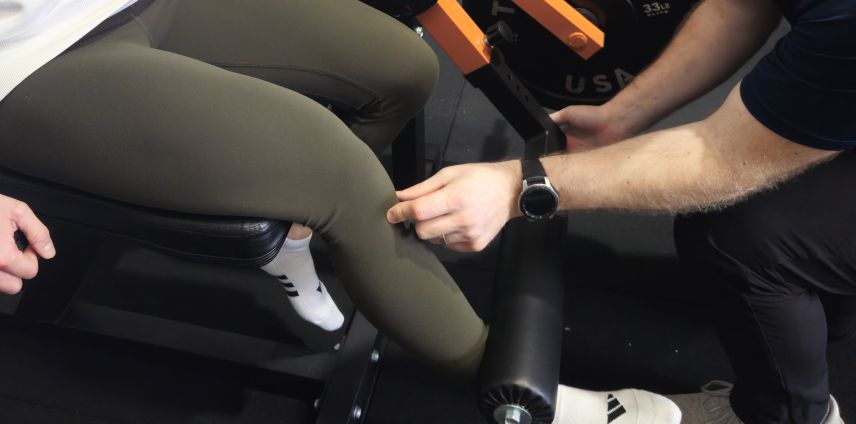
At Adapt Sports Physiotherapy, we use VALD ForceDecks and the VALD Dynamo to measure limb symmetry and strength output at key points during rehabilitation. This means return-to-sport decisions are based on measurable data rather than guesswork — which matters when the stakes are as high as they are with ACL recovery.
ACL Rehab for Active Adults in Ringwood and Surrounds
We work with active adults across Ringwood, Croydon, Lilydale, Mooroolbark, and Chirnside Park who are navigating ACL injuries at various stages — from initial assessment and decision-making through to late-stage return to sport. For a comprehensive overview of ACL assessment and treatment options, see our ACL injury and rehabilitation guide. If you’re considering non-surgical management, our non-surgical ACL rehab guide covers that pathway in detail.
Whether you’re working out whether surgery is right for you, preparing for reconstruction, working through early post-operative rehab, or stuck in the middle of the process and not progressing the way you’d hoped — a thorough assessment is the right starting point.
If you’re also managing knee pain alongside your ACL rehab, our guides to knee pain after football and knee pain in Chirnside Park may also be useful reading.
Or call (03) 4063 3520
Frequently Asked Questions
How long does ACL rehabilitation take?
For those who have surgery, the minimum is typically nine months before return to unrestricted sport — and many guidelines now suggest twelve months for high-risk sports involving pivoting and cutting. Time alone is not a reliable guide — meeting objective criteria matters more than hitting a specific date.
Do I need surgery after an ACL tear?
Not necessarily. The decision depends on your activity goals, the stability of your knee, your age, and whether there are associated injuries. Physiotherapy assessment early on helps clarify which pathway makes the most sense for your situation.
Can I return to football after an ACL tear?
Many people do return to football and other pivoting sports after ACL injury — with or without surgery. Return to sport at the same level is more likely when rehabilitation is thorough, criteria-based, and not rushed. The re-injury rate is higher when players return before meeting objective strength and movement benchmarks.
What is limb symmetry and why does it matter in ACL rehab?
Limb symmetry refers to how closely the strength and power output of your injured leg matches your uninjured leg. A common benchmark used in return-to-sport decisions is achieving 90% or greater limb symmetry in key muscle groups. Objective testing — rather than subjective assessment — is the most reliable way to measure this.
Does Adapt Sports Physiotherapy see post-surgical ACL patients?
Yes. We work with patients at all stages — pre-surgical preparation, early post-operative rehab, and late-stage return to sport, as well as those pursuing non-surgical management. If you’ve had surgery elsewhere and need ongoing support in the Ringwood area, we’re happy to continue from where your previous provider left off.