
ACL Rehabilitation in Lilydale: A Guide to Getting Back to Sport
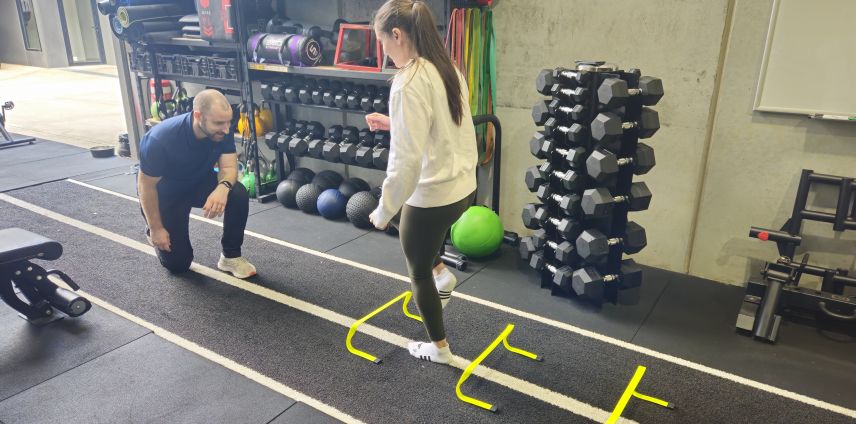
An ACL injury stops athletes in their tracks — and the rehabilitation journey that follows is one of the most demanding processes in sports medicine. If you’re based in Lilydale or the Yarra Valley and navigating an ACL injury, whether it happened last week or you’re months into recovery and feeling uncertain about what comes next, this article is for you.
Adapt Sports Physiotherapy is located in Chirnside Park, minutes from Lilydale, and ACL rehabilitation is one of our primary clinical focuses. We work with footballers, netballers, basketballers, and active adults at every stage of ACL recovery — from the acute injury through to full return to competition.
General information only. This article does not replace individual assessment, diagnosis, or treatment. Outcomes vary between individuals.
What Is the ACL and Why Does It Matter?
The anterior cruciate ligament sits inside the knee joint and is one of its primary stabilisers — particularly during pivoting, cutting, landing, and sudden changes of direction. It’s the ligament most commonly torn in contact and pivoting sports, and its injury typically produces immediate instability and rapid joint swelling.
What makes ACL injuries particularly significant is that the ligament has very limited capacity to heal on its own. This is why most athletes returning to pivoting sport pursue surgical reconstruction — and why the rehabilitation program that follows surgery is so critical to the outcome.
Surgery or No Surgery — What’s the Right Choice?
Not every ACL injury automatically requires reconstruction surgery. For some people — particularly those in lower-demand activities or older athletes — non-surgical management with structured rehabilitation is a viable pathway.
For athletes wanting to return to football, netball, soccer, or basketball — sports that involve pivoting, cutting, and contact — reconstruction is more commonly the recommended path. But this decision should be made in consultation with both a surgeon and a physiotherapist who understands your specific goals.
What both pathways share is the same non-negotiable: structured, progressive rehabilitation. The surgery alone does not restore function — the rehabilitation program is what determines how well and how safely you return to sport.
The Phases of ACL Rehabilitation
Modern ACL rehabilitation is criteria-based — meaning progression from one phase to the next is determined by what your knee can actually demonstrate, not simply by how many weeks have passed. This is a fundamental principle that separates good ACL rehab from poor ACL rehab.
Phase 1: Acute Management and Early Recovery (0–6 weeks)
The immediate priority after ACL injury or reconstruction is managing the acute response and restoring basic knee function.
- Controlling swelling and pain
- Restoring full knee extension — often underemphasised but critical to later phases
- Progressively regaining knee flexion
- Early quadriceps activation — waking up the muscle that switches off most significantly after ACL injury
- Normalising gait and managing daily activities
Failing to achieve full knee extension in this phase is one of the most common early mistakes, and it creates compounding difficulties through every phase that follows.
Phase 2: Building Strength and Movement Control (6–16 weeks)
Once early recovery criteria are met, the focus shifts decisively to strength. This is where the foundation for safe return to sport is built — and where many rehabilitation programs fall short by not pushing hard enough.
- Progressive lower limb strengthening — quadriceps, hamstrings, glutes, and calf muscles
- Single-leg exercises to identify and close the strength gap between the injured and uninjured leg
- Balance and proprioception training
- Gym-based progressions — leg press, Romanian deadlift, step-ups, split squats, and single-leg variations
- Objective strength testing to measure limb symmetry and guide progression
A limb symmetry index of at least 70–80% is typically required before progressing to running. This is measured, not estimated.
Phase 3: Return to Running, Plyometrics, and Agility (4–9 months)
Returning to running is a milestone — but it’s a milestone that requires criteria to be met first, not a date in the calendar.
- Structured return-to-running progression — beginning with walk/run intervals and building to continuous running
- Plyometric progressions — double-leg landing mechanics, progressing to single-leg and sport-specific jump patterns
- Lateral agility and change of direction training
- Sport-specific movement patterns introduced under controlled conditions
- Ongoing strength and symmetry monitoring throughout
Phase 4: Return to Sport (9–12+ months)
Return to full competition is the final phase — and the most consequential decision in the entire rehabilitation process. Athletes who return before meeting objective criteria face a re-injury risk that is significantly higher than those who complete the process properly.
Criteria for return to sport typically include:
- 90%+ limb symmetry across a battery of hop tests — single hop, triple hop, crossover hop, and timed hop
- Quadriceps and hamstring strength benchmarks met on objective testing
- Controlled movement mechanics under sport-specific loading
- Graduated return to team training before return to full competition
- Psychological readiness — confidence in the knee under pressure is a legitimate and measurable component of return-to-sport assessment
How Long Does ACL Rehabilitation Take?
For return to contact and pivoting sport, the realistic timeline is 9–12 months following reconstruction surgery. This is not a conservative estimate — it reflects what the evidence supports for minimising re-injury risk.
Re-injury rates for ACL are highest in athletes who return to sport before 9 months, and significantly lower in those who meet objective criteria before returning. The timeline exists for a reason.
Non-surgical pathways vary depending on the individual, the degree of instability, and the demands of the sport or activity being returned to.
What ACL Rehab Looks Like at Adapt Sports Physiotherapy
ACL rehabilitation is a long-term commitment — which is why having a local physiotherapist close to Lilydale matters. Consistent, ongoing support across every phase produces better outcomes than sporadic input.
Our approach uses objective testing at each phase to guide progression — limb symmetry assessments, hop testing, and strength benchmarks that reflect current best practice in ACL rehabilitation. We set targets, test them, and progress when they’re met.
We see ACL patients from Lilydale, Chirnside Park, Croydon, Mooroolbark, and Ringwood — from local football and netball clubs through to recreational athletes who simply want to get back to the activities they enjoy.
Whether you’re in the first week after injury, freshly out of surgery, or months into recovery and feeling stuck — an assessment will identify exactly where you are and what needs to happen next.
For a full overview of our approach, visit our ACL Rehabilitation page.
ACL Rehabilitation Serving Lilydale and the Yarra Valley
Adapt Sports Physiotherapy is located at 3 Belmike Close, Chirnside Park — a short drive from Lilydale, Mooroolbark, Croydon, and Ringwood.
For our full overview of ACL causes, diagnosis and treatment options, see our ACL injury and physiotherapy guide. Football players can also find sport-specific guidance in our ACL injuries in footballers post.
Book an assessment online or call us on (03) 4063 3520.
Frequently Asked Questions
Do I need surgery for an ACL tear?
Not always. Non-surgical management is appropriate for some presentations — particularly in lower-demand activities or where instability is minimal. For athletes returning to pivoting and contact sport, reconstruction is more commonly recommended. The right decision depends on your specific injury, goals, and activity level, and is best made with your surgeon and physiotherapist. (General information only.)
How soon can I start physio after ACL injury?
Physiotherapy can begin in the days immediately following injury — before surgery if reconstruction is planned. Pre-surgical rehabilitation, sometimes called “prehab”, has good evidence for improving post-surgical outcomes, particularly for restoring quadriceps function and knee extension prior to the operation. (General information only.)
When can I return to running after ACL reconstruction?
Return to running is guided by achieving specific strength criteria — typically around 70–80% limb symmetry — rather than a fixed timeframe. This is generally assessed from around 12–16 weeks post-surgery, though it varies based on individual rehabilitation progress. (General information only.)
What is prehab and do I need it before ACL surgery?
Prehabilitation refers to physiotherapy completed before surgery with the aim of improving post-surgical outcomes. For ACL reconstruction, the evidence supports prehab for improving quadriceps strength, knee extension, and swelling control prior to surgery — all of which positively influence early post-surgical recovery. (General information only.)
What if I’m already months post-surgery and haven’t done structured rehab?
It’s not too late. We regularly assess patients who are well into their recovery and haven’t completed a structured program. An assessment will identify your current capacity, any gaps in strength or movement, and what’s needed to progress toward return to sport safely. (General information only.)
General information only — this article does not replace individual assessment, diagnosis, or treatment. Outcomes vary between individuals.