
ACL Injuries in Footballers: Prevention, Treatment and Recovery
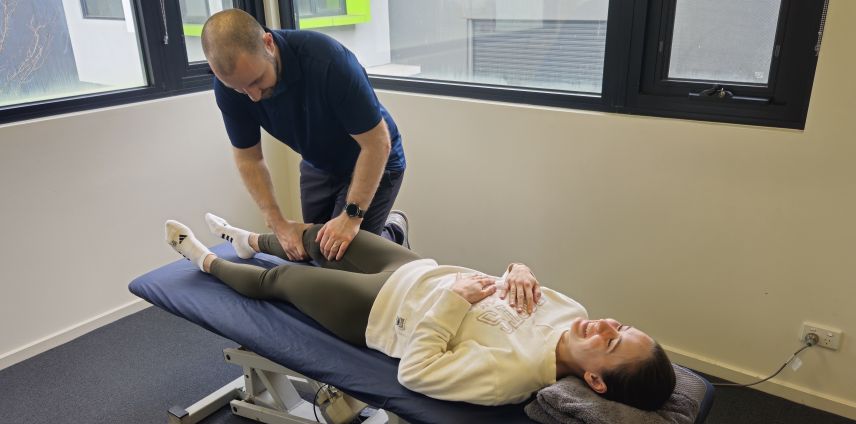
ACL injuries are one of the most common and devastating injuries in football. The ACL is a key stabilising ligament in the knee that controls rotational movement — and for footballers whose game relies on sudden stops, rapid direction changes and pivoting under pressure, it’s particularly vulnerable to the cumulative demands of a full season.
ACL injuries often occur without contact, when a player plants their foot while twisting, lands awkwardly after a mark, or decelerates too quickly. They can sideline athletes for months, but with the right rehabilitation most footballers return to play stronger and more resilient than before.
How Football Specifically Creates ACL Risk
ACL injuries in football are almost always non-contact or minimal-contact events — meaning the ball or an opponent rarely directly causes the tear. The mechanism is usually biomechanical: a landing, a plant-and-turn, or a deceleration that places rotational load through the knee at an angle the ACL can’t handle.
The specific situations we see most in football:
- Contested marking: Landing from a mark — particularly when landing on one leg, off-balance, or on another player’s foot — is one of the highest-risk moments in Australian football. The combination of vertical force and unexpected rotational load is dangerous.
- Spoiling and contested aerial work: Reaching to spoil a mark or contest overhead often results in awkward, single-leg landings with the knee in a vulnerable position.
- Planting and pivoting: Cutting to lead, turning on the ball, or defensive footwork all involve rapid deceleration and directional change — particularly risky when done under fatigue in the third or fourth quarter.
- Wet or slippery surfaces: Boots gripping unexpectedly on wet grass creates sudden rotational forces that can exceed the ACL’s tolerance.
- Fourth-quarter fatigue: Neuromuscular fatigue means hamstrings and glutes provide less dynamic knee protection late in a game — this is when ACL injury rates spike.
Recognising an ACL Injury on the Football Field
Most ACL injuries in football are immediately apparent. The player will often stop suddenly — not because of a collision, but because the knee has given way beneath them. Common signs are a pop or crack sensation in the knee, rapid swelling developing within the first hour, and an inability to continue playing due to instability rather than pain alone.
If a footballer comes off the field with significant knee swelling and reports that it “gave out” during a run or landing — even with minimal contact — an ACL injury should be suspected and assessed promptly. Don’t let the player return to the field. Early physiotherapy assessment can give you clarity before imaging is organised, avoiding weeks of uncertainty.
What Happens After the Injury: Assessment and Planning
A physiotherapy assessment in the days after injury can diagnose an ACL tear with good accuracy using clinical tests including the Lachman and pivot shift tests — giving you a working diagnosis before MRI is organised. This matters because it means rehabilitation planning can start immediately, rather than waiting weeks for imaging before beginning any structured management.
MRI is typically organised to confirm the extent of the injury and check for associated damage — meniscal tears and bone bruising are both common in football ACL injuries and influence the rehabilitation pathway. For footballers, the assessment conversation also includes goals and timeline: what level you play at, whether you’re mid-season or off-season, and what return to football looks like for your role and club.
Treatment Options
Non-Surgical Management
Non-surgical management is a legitimate pathway for some footballers — particularly those in social or recreational grades, those with partial tears, or those who are older and not returning to high-intensity pivoting football. The decision is also influenced by season timing: a footballer who injures their ACL mid-season, whose knee is stable enough to rehabilitate non-surgically, may choose to manage conservatively and reassess at the end of the year. This is an individual decision that should be made with good information and appropriate assessment — not a default. For more on the non-surgical pathway, see our non-surgical ACL rehab guide.
Surgical Reconstruction
Complete ruptures in athletes wanting to return to high-level football typically require ACL reconstruction, using a graft from the hamstring or patellar tendon. Completing pre-surgery rehabilitation first significantly improves surgical outcomes — better post-operative quad strength, faster recovery timelines, and more confidence moving into surgery physically prepared.
Rehabilitation at Adapt Sports Physiotherapy
At Adapt Sports Physiotherapy, our tailored ACL rehabilitation programs for footballers from Chirnside Park, Croydon, Lilydale and Mooroolbark are structured across four phases:
- Phase 1 — Acute recovery: Reduce swelling, restore range of motion, begin gentle quad activation and normal walking pattern
- Phase 2 — Strength and stability: Progressive quad, hamstring and glute strengthening; balance and proprioceptive training
- Phase 3 — Functional training: Running, agility, change of direction, football-specific movement patterns — cutting, pivoting, jumping and landing
- Phase 4 — Return to play: Strength benchmarks, hop tests, and functional assessments to confirm readiness before returning to team training and match play
We use VALD ForceDecks force plates and the VALD DynaMo dynamometer to measure limb symmetry objectively at key milestones. This removes guesswork from return-to-play decisions and gives footballers, coaches and clubs clear data on physical readiness. For more on our ACL approach, see our ACL injury and physiotherapy overview.
Preventing ACL Injuries in Football
While not all ACL injuries can be prevented, evidence-based strategies reduce risk significantly — particularly in female athletes and those returning from a previous ACL injury:
- Footy First warm-up program: This AFL-specific neuromuscular warm-up was designed to reduce lower limb injuries in community football. Performed consistently at training and before games, it includes landing mechanics, single-leg balance, and change-of-direction work. Clubs that use it consistently show lower ACL and ankle injury rates.
- Hamstring and glute strength: Nordic hamstring curls and hip-dominant exercises directly address the muscle imbalances that increase ACL load during high-speed deceleration. This is one of the most evidence-supported prevention strategies in football.
- Landing mechanics coaching: Teaching players to land from marks and spoils with knees bent, hips loaded, and weight balanced reduces the rotational forces that cause ACL tears. This is especially important for junior footballers.
- Boot selection: Boots appropriate for the surface — avoiding excessive grip on wet grounds — reduce the likelihood of unexpected rotational loading.
- Preseason load management: Gradually building sprint and contact volume through preseason avoids the fatigue-related neuromuscular breakdown that increases fourth-quarter injury risk. Our guide to preseason injury prevention covers how to structure this safely.
Why Choose Adapt Sports Physiotherapy for ACL Rehabilitation?
Our team at Adapt Sports Physiotherapy has extensive experience working with footballers at all levels — from community leagues to competitive club players. We understand what football demands physically and what it means to an athlete to be sidelined. Our rehabilitation programs are built around getting you back to that level, not just back to walking normally.
- Expert assessment — identifying the extent of your injury and any contributing factors
- Individualised treatment plans — designed around the specific demands of football and your return-to-sport goals
- Sport-specific rehabilitation — progressively preparing you for the movements football requires: cutting, pivoting, contested marking, and contact
- Objective return-to-play testing — VALD ForceDecks and VALD DynaMo for limb symmetry data before returning to the field
- Local and accessible — serving Chirnside Park, Croydon, Lilydale and Mooroolbark with flexible appointments
Female Footballers and ACL Injury
Female athletes sustain ACL injuries at a significantly higher rate than male athletes — a difference attributed to a combination of anatomical, hormonal and neuromuscular factors. In women’s football (AFL Women’s and community netball/soccer), ACL injury rates have received considerable attention, and prevention programs are increasingly being embedded into club warm-up routines.
At Adapt Sports Physiotherapy, we work with female footballers and netballers from across Chirnside Park, Croydon and Lilydale, applying rehabilitation and prevention principles that account for these specific factors. Neuromuscular training programs have been shown to significantly reduce ACL injury rates in female athletes, and these are increasingly being embedded into pre-training warm-up routines at club level. If you’re returning to sport after an ACL injury or want to reduce your risk going into the season, we can help.
Return to Football: What Does It Actually Look Like?
Returning to football after an ACL injury involves a sequence of milestones that go well beyond running in a straight line. Full return to competition-level football requires the ability to perform the specific movements the game demands — under pressure, under fatigue, and with confidence.
At Adapt Sports Physiotherapy, we progress footballers through these stages before clearing them for match play:
- Straight-line running and change of direction — full speed, without compensation or avoidance behaviour
- Unopposed marking and handball practice — comfortable landing patterns before adding contest pressure
- Contested aerial work and spoiling — working back into the high-risk movements specific to football under controlled conditions
- Tackling and contact reinsertion — graduated return to physical contact in training before full match participation
- Full training session without pain, compensation or restriction — sustained performance across a complete session before match clearance
Objective testing with VALD ForceDecks and the VALD DynaMo dynamometer confirms strength readiness at key milestones. Clubs, coaches and parents receive clear data on where the athlete is in this process — not a vague “almost ready.” For a step-by-step overview of the full ACL recovery process, see our guide to ACL injury recovery steps for athletes.
Frequently Asked Questions
How long will I be out of football after an ACL injury?
A full return to competitive football typically takes 9–12 months. This timeline applies whether you choose surgical or non-surgical management. Individual progress, rehabilitation consistency and meeting objective return-to-sport criteria all influence the actual timeline. (General information only.)
Can I return to football without ACL surgery?
Some footballers — particularly those playing social or lower-intensity football — can return to the field without surgery through a structured rehabilitation program. This depends on knee stability, the extent of the injury, and the demands of your football role. Your physiotherapist can help assess whether this is a realistic option. (General information only.)
What is pre-hab and why does it matter?
Pre-hab refers to completing strengthening work before ACL reconstruction surgery. Research consistently shows that athletes who complete 5+ weeks of structured pre-hab have significantly better outcomes at 2 years post-surgery compared to those who go straight to the operating table. (General information only.)
When can I start training again after ACL surgery?
Light training typically begins 6–8 weeks post-surgery, with gradual return to running around 12–16 weeks. Return to full contact training and match play is usually between 9–12 months, when objective criteria are met. (General information only.)