
Muay Thai Injuries: Prevention and Physio Care
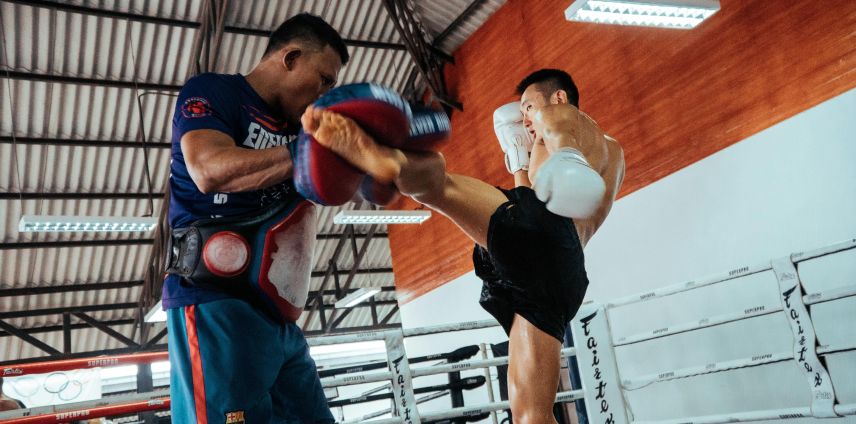
Muay Thai is dynamic and rewarding — but it’s also demanding on the body. If you train in Chirnside Park, Croydon or Ringwood, chances are you’ve felt a hip twinge, shoulder pinch, or knee ache at some point. The combination of high-volume kicking, repetitive punching, and clinch work creates predictable stress patterns through the hip, shoulder, and knee — and when load spikes or technique breaks down under fatigue, injury follows.
The goal at Adapt Sports Physiotherapy is to manage these injuries without pulling you away from training unnecessarily. This guide explains what we commonly see in Muay Thai athletes, why it happens, and what both treatment and prevention look like.
Common Muay Thai Injuries — and Why They Happen
1. Hip Flexor and Groin Overload
High-volume kicking without adequate hip mobility or strength can overload the hip flexors and groin. Limited rotation through the hip forces the surrounding tissues to absorb more load than they’re designed for. This is particularly common when training volume increases rapidly or when the warm-up doesn’t adequately prepare the hip for the range demanded by round kicks and teeps.
Management involves temporarily reducing kick volume, improving hip flexor flexibility and external rotation, and progressively strengthening the glutes and deep hip stabilisers. Our sports physiotherapy service addresses this through both hands-on treatment and a targeted exercise program.
2. Shoulder Pain from Punching and Clinch Work
Repetitive punching under fatigue and the demands of clinch work — particularly the sustained elevation and rotation required — can irritate the rotator cuff or AC joint, especially when scapular stability is limited. This is one of the most common upper limb complaints in Muay Thai athletes.
Improving rotator cuff strength and shoulder blade control both reduces injury risk and supports performance — better shoulder stability translates to more powerful and efficient striking. For more on shoulder assessment and treatment, see our shoulder pain physio page and our post on shoulder injury prevention and early-stage exercises.
3. Knee Irritation and Instability
Pivots, defensive checks, and repeated landing mechanics stress the knee — particularly when hip control is limited or training volume spikes quickly. Patellar tendinopathy and patellofemoral pain are common in Muay Thai athletes who train frequently without adequate lower limb strength. For ligament-specific injuries and return-to-training plans, see our knee pain physio page.
Why Physiotherapy Helps Muay Thai Athletes
- Movement assessment: Identifying breakdowns in hip rotation, trunk control, and shoulder mechanics before they become injuries
- Mobility and control: Restoring hip range and improving motor control for kicking, pivoting, and clinch work
- Progressive loading: Graded strength work that builds tissue tolerance without long layoffs from training
- Load management: Planning training volume and recovery intelligently — particularly around fight camp preparation
For a broader performance approach, our post on how physiotherapy helps athletes perform at their best covers the principles we apply across all combat sports athletes.
Prevention Drills for Muay Thai Athletes
Hip Mobility (2–3 minutes pre-session)
- 90/90 rotations: Seated on the floor with both knees at 90 degrees, rotate slowly from side to side — 6–8 reps each direction
- Deep squat holds: Hold a comfortable squat position with elbows pressing knees outward — 2 × 20–30 seconds
Shoulder Control (2–3 sets)
- Banded external rotations: Elbow by side, slow controlled tempo — 10–12 reps
- Scapular retractions: Cable or band rows focusing on shoulder blade movement at the end range — 10–12 reps
Knee Stability (2–3 sets)
- Single-leg squats or step-downs: Keep knee tracking over the second toe throughout — 8–10 reps each leg
- Split-squat isometrics: Hold the bottom position of a split squat for 20–30 seconds to build tolerance
Managing Pain Without Losing Training Momentum
Adjust training, don’t stop: Reduce total volume or intensity while keeping technique work and pad sessions at manageable load. Maintain conditioning with lower-irritability cross-training options where needed.
Address mobility restrictions: Tight hip flexors and limited thoracic rotation push stress into the lower back and knees. Short, frequent mobility sessions are more effective than long, infrequent ones.
Build the posterior chain and rotator cuff: Glute, hamstring, and rotator cuff strength improve force transfer, reduce compensatory loading, and support both injury resilience and striking power.
When to seek assessment: If pain persists beyond 1–2 weeks, worsens with training, includes instability, locking, numbness, or weakness — book an assessment. Early physiotherapy intervention leads to better outcomes than waiting. Our physiotherapy treatments page covers what an assessment and treatment program involves.
Frequently Asked Questions
Is Muay Thai bad for your knees?
Not necessarily. Knee irritation in Muay Thai often comes from limited hip control, rapid training load increases, or repetitive pivoting and checking without adequate lower limb preparation. Strengthening the hips and improving kick mechanics can help significantly reduce knee stress. (General information only.)
Why do my hips hurt when I throw round kicks?
Hip pain during kicking commonly relates to tight hip flexors, reduced rotation, or weakness in the glutes and deep hip stabilisers. High-volume kicking without adequate preparation overloads the area. Consistent mobility work and progressive hip strengthening are the most effective long-term strategies. (General information only.)
What causes shoulder pain in Muay Thai?
Repetitive punching under fatigue or clinch work can irritate the rotator cuff or AC joint. Limited scapular control or insufficient rotator cuff strength is a common contributor. Gradual progressive strength training for the shoulder blade muscles and rotator cuff addresses both pain and performance. (General information only.)
Can I keep training if something feels sore?
Mild, short-lasting muscle soreness is common in Muay Thai. However, sharp pain, swelling, instability, or symptoms that worsen with training may indicate overload or injury. In these cases, reducing intensity and seeking a physiotherapy assessment can guide safe modifications. (General information only.)
How can I prevent common Muay Thai injuries?
Key strategies include building hip and shoulder mobility, improving scapular and trunk control, strengthening the lower body — particularly the glutes and hamstrings — and managing weekly training load carefully. Even 5 minutes of focused pre-session preparation makes a noticeable difference over time. (General information only.)
For more on how we work with contact sport and combat sport athletes, see our sports physiotherapy page or our guide on CrossFit and shoulder injuries, which covers many of the same overhead and upper-body demands.