
CrossFit and Physiotherapy: How to Manage Pain and Keep Training
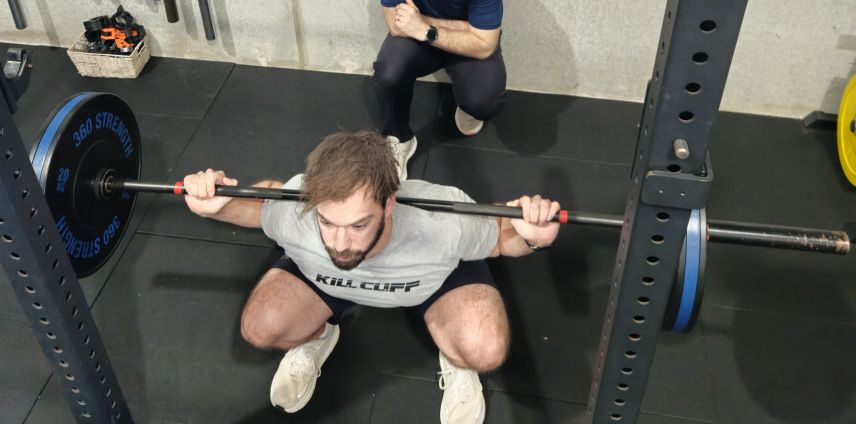
CrossFit is intense, rewarding, and addictive — but let’s be honest, it’s also demanding on your body. If you’re training regularly in Chirnside Park, Ringwood or Croydon, chances are you’ve had a niggle or three. High training frequency, heavy loading, and the competitive culture of CrossFit all contribute to a higher-than-average rate of overuse and technique-driven injury.
Here’s the thing most people don’t realise: seeing a physiotherapist doesn’t mean you’ll be told to stop training. In most cases, the goal is the opposite — keep you training, without making things worse.
Common CrossFit Injuries We See
At Adapt Sports Physiotherapy, the most common CrossFit presentations aren’t catastrophic. They’re overuse or movement-related problems that flare under fatigue or load.
Shoulder Pain
Often driven by overhead positioning issues, fatigue under high volume, or inadequate shoulder stability. In CrossFit athletes, the shoulder is under significant load across kipping movements, overhead pressing, muscle-ups, and Olympic lifts. Common presentations include rotator cuff overload, impingement, and AC joint irritation — most of which can be managed without stopping training if caught early. See our shoulder pain physio page for more on how we assess and treat shoulder issues in gym athletes.
Lower Back Tightness or Pain
Common with deadlifts, kettlebell swings, and high-rep WODs. Often caused by bracing strategy breakdowns under fatigue, hinge technique errors, or limited hip and thoracic mobility. The lower back is frequently the first structure to signal load tolerance issues — particularly in athletes who are increasing volume or intensity quickly. See our back pain physio page for more on what contributes to lower back pain in CrossFit and how it’s managed.
Knee Pain
Flares with high-rep squats, lunges, box jumps, or poorly managed training load. Common contributors include quad dominance, limited glute control, and ankle stiffness — all of which affect how the knee loads during high-rep lower body work. Patellar tendinopathy and patellofemoral pain are the two most common knee presentations in CrossFit athletes. Visit our knee pain physio page for more detail.
You Don’t Need to Stop Training
The biggest misconception we hear: “If I see a physio, I’ll have to stop lifting.” Unless there’s a serious tear, fracture, or red flag — which is rare — we find ways to keep you moving. This might mean:
- Modifying the movement pattern — Romanian deadlifts instead of conventional, for instance, while lower back pain is being managed
- Adjusting load or volume — reducing reps, tempo, or weight temporarily while the underlying issue is addressed
- Changing position — floor press or landmine press instead of barbell overhead while shoulder symptoms settle
This happens alongside targeted rehabilitation through our sports physiotherapy service — so you’re moving forward, not just resting.
If you’re returning from a specific injury or a break from training rather than training through current pain, see our guide to CrossFit injury recovery and return to training.
Why CrossFit Athletes Benefit from Physiotherapy
- Movement assessment: Finding technique breakdowns and control deficits before they become injuries
- Mobility and control: Restoring quality of movement under load — hip mobility, thoracic extension, shoulder stability
- Progressive rehabilitation: Structured loading that fits your training cycle and doesn’t require complete rest
- Load management: Helping you plan deload weeks and build back up intelligently after injury or illness
For more on how we work with CrossFit athletes specifically, see our post on CrossFit athlete recovery and physiotherapy.
What to Expect from Your First Assessment
Your first session at Adapt Sports Physiotherapy runs for 30 minutes. For CrossFit athletes, this means a thorough history of your training — your current program, volume, recent changes, and when and how the pain started — followed by a physical assessment of the relevant area.
For shoulder presentations, this includes movement screening, rotator cuff and stability testing, and assessment of thoracic mobility. For lower back, we look at hinge mechanics, bracing strategy, and hip mobility. For knee, we assess quad and glute function, squat mechanics, and load tolerance.
By the end of the session, you’ll have a clear working diagnosis and a plan that tells you what you can train, what to modify, and what to address in rehabilitation — not just a generic rest-and-ice approach.
Simple Modifications You Can Use Now
Shoulder-Friendly Tweaks
- Use ring rows or strict pull-ups instead of kipping when the shoulder is irritated
- Swap to landmine or half-kneeling press instead of barbell overhead
- Add banded external rotations to your warm-up before any pressing or pulling session
Back-Friendly Tweaks
- Reinforce your hinge pattern with tempo Romanian deadlifts at reduced load
- Elevate the bar when pulling from the floor if symptoms flare with a standard setup
- Focus on diaphragmatic bracing and hip mobility before heavy sessions
Knee-Friendly Tweaks
- Use box squats to temporarily scale squat depth while knee symptoms settle
- Warm up with ankle mobility drills and glute activation before lower-body WODs
- Add single-leg strength work — split squats, step-downs — as progressive accessory training
How Long Do CrossFit Injuries Take to Resolve?
This varies significantly depending on the injury type, how long it’s been present, and how consistently the rehabilitation is followed. Minor overuse issues caught early — a rotator cuff irritation, a patellar tendon flare, early-stage shin pain — often settle within 4–8 weeks with load modification and targeted exercise.
More established tendinopathies or structural issues can take 12 weeks or longer. The key variable in most cases is not the severity of the injury but how early it’s addressed. Athletes who modify load and start rehabilitation at the first sign of an issue consistently recover faster than those who train through pain until it becomes severe.
We also recognise that CrossFit athletes are generally not going to stop training for three months. Our job is to work within the reality of your training life — not prescribe an idealised rest protocol that won’t be followed.
When to Seek Assessment
It’s worth getting checked if you notice:
- Sharp or escalating pain during or after training
- Swelling, instability, or unexpected weakness
- Locking, catching, tingling, or numbness
- Pain that persists more than 1–2 weeks despite modifying training
Early assessment consistently leads to better outcomes — and in most cases keeps you on the floor longer, not off it. Book with a physiotherapist who understands CrossFit, the demands of high-intensity training, and what it actually takes to keep an athlete moving through rehabilitation.
Frequently Asked Questions
Do I need to stop CrossFit to see a physiotherapist?
In most cases, no. Physiotherapy for CrossFit athletes is about keeping you training with smart modifications, not taking you off the floor. Complete rest is rarely the right approach. (General information only.)
How do I know if a CrossFit injury needs to be assessed?
If pain is sharp, worsening, causing swelling or instability, or hasn’t improved after 1–2 weeks of modifying your training, a physiotherapy assessment is a good idea. The sooner an issue is assessed, the more options you have for managing it without significant time off. (General information only.)
Can a physio help with my CrossFit technique?
Yes. A physiotherapy movement assessment identifies position, bracing, and mobility issues that contribute to pain and limit performance. We work with athletes on movement quality — not just treating pain after the fact. (General information only.)