
Ankle Sprain
An ankle sprain is a common injury to the ligaments supporting the ankle, often occurring during sport or everyday activity. Assessment and structured rehabilitation support a safe return to activity.
30-minute appointments as standard · No referral required
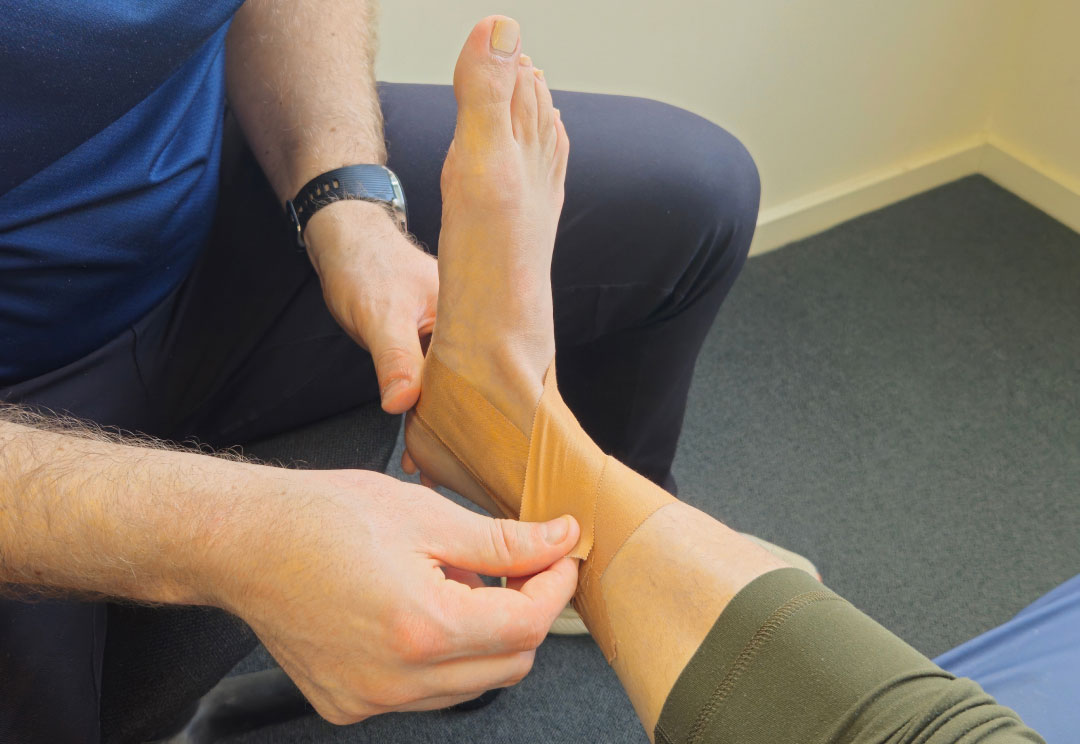
What is Ankle Sprain?
An ankle sprain involves stretching or tearing of the ligaments that support the ankle joint, most commonly occurring when the ankle rolls inward. It’s one of the most common sporting injuries, but can also happen during everyday activity.
This can include immediate pain and swelling, difficulty weight-bearing, bruising, or a feeling of instability in the ankle. Severity varies significantly between individuals, which affects how the injury is managed.
How We Assess Ankle Sprain
Assessment includes understanding how the injury occurred, your current symptoms, and your ability to weight-bear and move the ankle.
We assess ankle movement, strength, stability and balance, to understand the extent of the injury and guide an appropriate rehabilitation plan.
Treatment and Rehabilitation Approach
Treatment typically progresses from managing initial swelling and pain, through restoring movement and strength, to balance and control work that supports a safe return to activity.
This sits within our broader foot and ankle pain and sports physiotherapy approach.

Looking for help with a Ankle Sprain?
An assessment can help identify the factors contributing to your symptoms and guide the next steps.
Symptoms
Pain and swelling
Often appears quickly after the injury, particularly around the outside of the ankle.
Difficulty weight-bearing
Some people can walk with discomfort, while others find weight-bearing difficult initially.
A feeling of instability
Some people notice their ankle feels less reliable, particularly on uneven ground, as they recover.
Causes and Risk Factors
A rolling or twisting incident
Most commonly occurs when the ankle rolls inward, often during sport or on uneven surfaces.
Previous ankle sprains
A history of previous sprains can be associated with reduced ankle stability over time.
Balance and control factors
Reduced balance or muscular control around the ankle can influence injury risk.
Return-to-Sport Considerations
Restore movement and reduce swelling
Early management focuses on settling symptoms and restoring comfortable movement.
Rebuild strength and balance
Progressive strengthening and balance work help rebuild the ankle’s stability and control.
Return to sport or activity gradually
A staged return to running, sport or activity is planned around how your ankle responds through rehabilitation.
Frequently Asked Questions
Is it OK to keep walking on a rolled ankle?
This depends on the severity of the injury and how your ankle is responding. Some gentle weight-bearing is often appropriate, while a more significant sprain may need a period of relative rest — an assessment can guide what’s right for you.
Do I need an X-ray for an ankle sprain?
Imaging isn’t required for most ankle sprains, and is generally considered if there are specific findings suggesting a fracture, which is assessed clinically.
How long does an ankle sprain take to heal?
This varies significantly depending on severity — your physiotherapist can give you a clearer timeframe once you’ve been assessed.
Why do ankle sprains keep happening?
Recurrent sprains can relate to incomplete rehabilitation of a previous injury, which is why structured rehabilitation — not just rest — matters for longer-term ankle stability.
Clinically reviewed by Ryan Harris on 18/08/2026