
Foot & Ankle Pain
Foot and ankle pain covers a wide range of presentations, from pain that builds gradually with walking, running or standing, to a specific injury such as a sprain. Assessment starts with understanding what's actually driving your symptoms, whatever the pattern.
30-minute appointments as standard · No referral required
What is Foot & Ankle Pain?
Foot and ankle pain covers a wide range of presentations, from pain that builds gradually with walking, running or standing, to a specific injury such as a sprain. Common patterns include Achilles and heel pain, and pain around the ankle joint itself — the underlying cause differs, but assessment starts with the same questions: what changed, what’s it being asked to do, and how is it responding to load.
Whether your foot and ankle pain relates to sport and training or everyday activity such as walking and standing, the approach starts with understanding what’s actually driving it.
This can include pain around the Achilles or heel area, discomfort after a rolled ankle, or soreness that develops with walking or running load.
How We Assess Foot & Ankle Pain
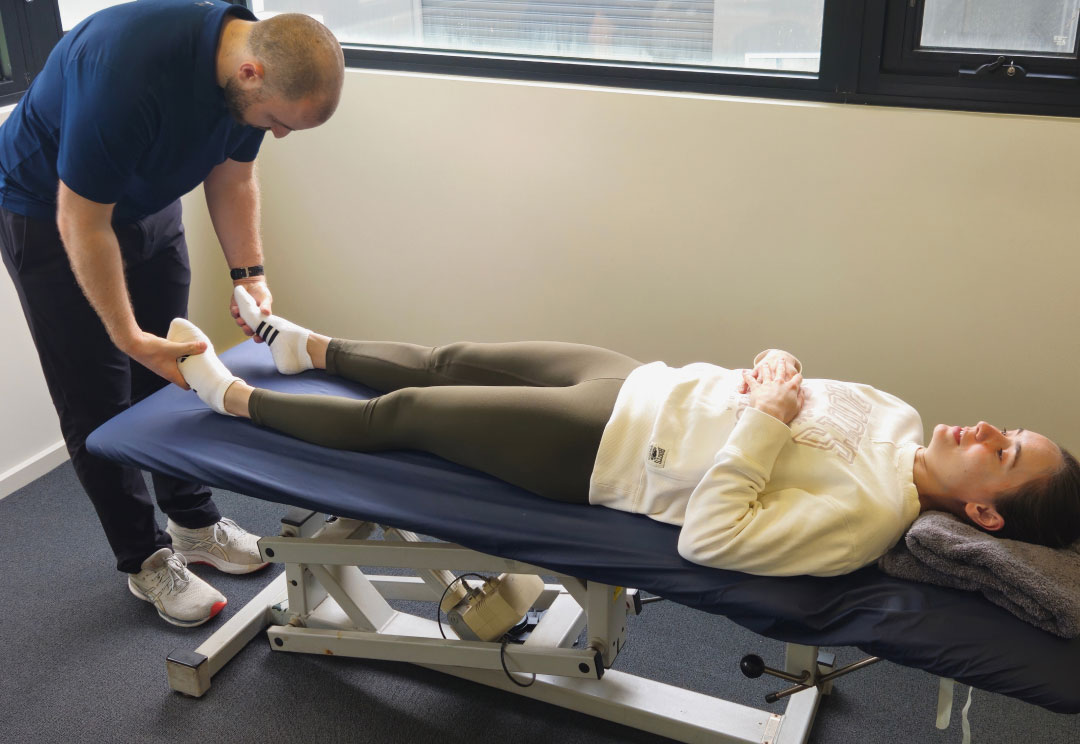
Assessment looks at your history — how your pain started, what makes it better or worse, and your footwear and activity levels — alongside movement, strength and control through the foot, ankle and lower limb.
Where relevant, this may include assessing your walking or running pattern to understand how load is being distributed through the area.
What to expect: Your assessment will usually involve discussing your symptoms, understanding how they affect your activity, assessing movement and strength through your foot and ankle, and developing a plan based on your goals.
Treatment and Rehabilitation Approach
Management is guided by what’s driving your symptoms, often combining hands-on treatment, targeted strengthening and guidance on managing load through the area while you stay as active as appropriate.
For people returning to running or training, this sits within our wider sports physiotherapy approach, with load reintroduced in structured steps.

Looking for help with Foot & Ankle Pain?
An assessment can help identify the factors contributing to your symptoms and guide the next steps.
Symptoms
Pain with specific activities
Pain during walking, running or standing for periods of time is a common pattern worth having assessed.
Swelling or stiffness
Swelling, stiffness or a change in how the foot or ankle moves can accompany foot and ankle pain.
Pain after a specific incident
Pain that started suddenly, such as after rolling the ankle, is assessed differently to pain that’s built up gradually.
Causes and Risk Factors
Training or activity load changes
An increase in walking, running or standing load can outpace what the tissue is currently able to tolerate.
Footwear and surfaces
Footwear and the surfaces you’re regularly active on can influence the load placed through the foot and ankle.
Previous injury
A prior sprain or injury can change how the area is loaded and controlled afterwards.
Return-to-Sport Considerations
Rebuild strength and control
Progressive strengthening through the foot, ankle and lower limb rebuilds the capacity needed for daily activity or sport.
Reintroduce load gradually
Walking, running or training load is reintroduced in stages, guided by how the area responds.
Return to sport-specific demands
For people returning to running or sport, training is built back in progressively as part of a staged plan.
Frequently Asked Questions
Do I need to stop walking or running with foot or ankle pain?
Often not. Many presentations can be managed by adjusting activity rather than stopping altogether, depending on what’s driving your symptoms. An assessment helps determine what’s appropriate.
What's the difference between Achilles pain and plantar heel pain?
Both are common presentations in this region but involve different structures and often different management approaches. An assessment identifies which is relevant to you and what it needs.
Do I need a scan for foot or ankle pain?
Imaging isn’t required for most foot and ankle pain. It’s considered when the result would change how it’s managed, which is discussed with you at assessment.
How long does foot or ankle pain take to settle?
This varies depending on the structure involved, how long symptoms have been present, and the demands you’re placing on the area. Your physiotherapist can give you a clearer picture once you’ve been assessed.